Ireland in the Parallax and Paralysis of Time: How John Kelly and Kevin Barry’s future Dystopias conform and break from Flann O’Brien’s Imagined Tomorrow. Part 1


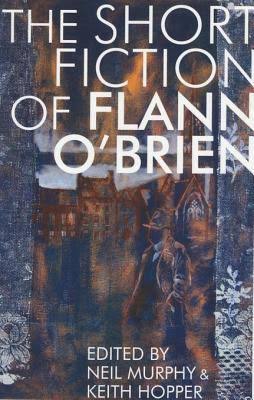
the-short-fiction-of-flann-obrien

There is a dichotomy that exists between Flann O’Brien’s works on dystopian literature particularly his short story “Revenge on the English in the year 2032!” and authors John Kelly and Kevin Barry’s respective novels From Out of the City and City of Bohane. Continue reading “Ireland in the Parallax and Paralysis of Time: How John Kelly and Kevin Barry’s future Dystopias conform and break from Flann O’Brien’s Imagined Tomorrow. Part 1”

The Uncertainty of Genre: Problems of Classifying Irish Speculative Dystopias within the National Narrative Part 3

Continued from Part 2

Flann O’Brien’s short story “Revenge on the English in the Year 2032!” written originally in Gaelic in nineteen thirty two, is a classic example of the post apocalypse dystopia. Violence is central to the actions of the text, we hear mention of a great war and the language barrier is used to incite revenge. There are no utopian positives, only Science Fiction dystopian negatives… Continue reading “The Uncertainty of Genre: Problems of Classifying Irish Speculative Dystopias within the National Narrative Part 3”

The Uncertainty of Genre: Problems of Classifying Irish Speculative Dystopias within the National Narrative Part 2

Continued from Part 1

Sterling’s creation of the Slipstream genre illustrates the slippage categories undergo. The vision of the Slipstream genre as a separate classification to Fantasy Fiction and Science Fiction where the writing “simply makes you feel very strange” was not a primal manifestation Sterling’s. Instead he was relabelling of a selection of titles that already had existed prior to his attempt to categorise them, such as Gabriel Garcia Marquez. He simply wanted to rebrand their genre classification as Slipstream genre titles… Continue reading “The Uncertainty of Genre: Problems of Classifying Irish Speculative Dystopias within the National Narrative Part 2”

The Uncertainty of Genre: Problems of Classifying Irish Speculative Dystopias within the National Narrative Part 1

Walking into Hodges Figgis, a modern lexicon of the Irish narrative, you are faced with shelves of classification that have grouped identity into categories. These categories are considered genres, they exist to help the capitalist consumer in sifting through writers until they discover a mirrored desire, a world that vibrates to their emotional and intellectual tuning. Continue reading “The Uncertainty of Genre: Problems of Classifying Irish Speculative Dystopias within the National Narrative Part 1”