It’s “prevent the future”, that’s the way I put it. Not predict it, prevent it. (Bradbury)
While it may seem unorthodox, the raison d’etre for dystopia fiction is to deliver salvation. These worlds of compounded social failure are built to express one primary intention: instigating redemption.
Horrific visions of tomorrow may seem unusual salvation but it is in fact built into their fictional DNA as they spur the reader to believe that the disaster they are reading can be prevented. Dystopias as potential elsewhere are examples of a fictional world that have collapsed all negative potentialities into a single imaginative zone. A ‘successful’ speculative dystopia as described by Frédéric Claisse and Pierre Delvenne in “Building on anticipation: Dystopia as empowerment” is built to undo or correct the potential tomorrow. Turning the clock back to a pre-cataclysmic moment is the aim of a successful dystopia, for:
“once the world it depicts is identified as a possible future, it seems to empower its readers again, restoring a ‘sense of possibilities’ that eventually makes alternative pathways thinkable”.
The dystopia can be read thus as a tool of empowerment for the reader, spurring them into action, in hope of avoiding the potential future that awaits.
One solution to the potential dystopia for the reader may lie within the narrative through the pariah or outsider figure. These figures operate outside of the dominant state ideological hierarchy and are often spurned by the totalitarian society for their non-conforming qualities. Yet it is these same qualities which will help the reader to understand the route to salvation. This does not mean that each of these salvation figures will rescue their landscape from the clutches of dystopia, in fact most will fail on some level. The salvation they bring lies in the reader not in their own textual existence. Claisse and Delvenne theorise this interpretation of the dystopia as an alarm message for the reader, a reminder that they can still save tomorrow from what they are consuming through the text:
“…dystopias open a very thin intervening space between a future announced as inescapable and, because of this very inevitability, an anterior present still opened to changes. The reader is expected to behave as the recipient of an alarm message”.
In contrast to the pariah, when figures that are conscripted into the national totalitarian order become our protagonists, they work to emphases the established state norms. These dystopian narrative’s work not as alarm messages for the reader, but instead subtle persuasion or subliminal messaging, encouraging the narratives imagined tomorrow. Within the Irish Canon, Flann O’Brien’s “Revenge on the English in 2032!” is an example of protagonists conforming to the state apparatus’ vision of order, resulting in the loss of autonomy. Due to protagonist conformity we can classify these narratives as failed dystopias, not because there is anything internally or narratively wrong in their structure but because they do not attempt to correct or redeem the dystopia. They instead wish to reinforce the paradigms already in existence within the narrative. The protagonist’s joy at the end of the text as an English student is beaten plays on national propaganda and does not attempt to alter the reader’s opinion. This is because the narrator of the text is a willing part of the totalitarian hierarchy. The reader is never given insight into the pariah of the text, the English student. Instead of acting to warn the reader as successful dystopias achieve, the text actually encourages the dystopian behaviour. That is why it is a failed dystopia.
Other depictions of dystopias conceived in the Irish Canon have produced successful dystopias: these figures have offered a hint at the true potential of the genre for social and creative expansion. John Kelly’s From Out of the City protagonist Anton Schroeder is an example of the successful dystopia pariah model of protagonist. What Schroeder represents is the diversification of identity in a landscape still clutching onto its nationalistic and myopic beliefs. Acting as the pariah due to this division of identity Schroeder’s second name is a revealing facet of his foreign origins. What he becomes in light of this is the deconstructive tool of the totalitarian socio norms, helping to expand and adjust the literary and social interpretations of identity.
Due to the mechanisation of these pariah figures in the dystopia’s totalitarian societal structures a restoration of individual equality and autonomy become desirable. Joseph Campbell’s work in The Hero with A Thousand Faces on the altering heroic archetypal found in society reveal that these anarchist figures are actually enacting the trope of the ‘Hero as World Redeemer’. Campbell’s work actually helps us to understand both aspect of the dystopia dichotomy between the totalitarian order and the pariah. The totalitarian order is representative of the ‘Hero as Emperor and as Tyrant’ who has become self-interested in its own preservation, resulting in the loss of community, “The upholding idea of community is lost. Force is all that binds it. The emperor becomes the tyrant ogre (Herod-Nimrod), the usurper from whom the world is now to be saved”. We see this style of behaviour in Flann O’Brien’s protagonist as he manipulates the English man due to the latter’s lack of understanding of Gaelic.
These figures as representative of the dystopia’s political structuring offer up a singular interpretation of order in society to which all must subscribe. Yet the pariah acts as the world redeemer to the tyrant or totalitarian order as they represent the facets of the ‘Other’ subaltern persona of the state. Throughout the narrative they undermine the singular interpretation that is ascribed by the totalitarian state. In contrast to O’Brien’s tyrant protagonist, Kelly’s Anton Schroeder represents this world redeemer. He is separated from the totalitarian order by his diverse ethnic identity and by the narrative’s end, it is he who must attempt to redeem the world by exposing the truth about the assassination of the American President. Campbell surmises this relationship between totalitarian order and pariah, tyrant and world redeemer as thus:
“The work of the incarnation is to refute by his presence the pretensions of the tyrant ogre. The latter has occluded the source of grace with the shadow of his limited personality; the incarnation, utterly free of such ego-consciousness, is a direct manifestation of the law”.
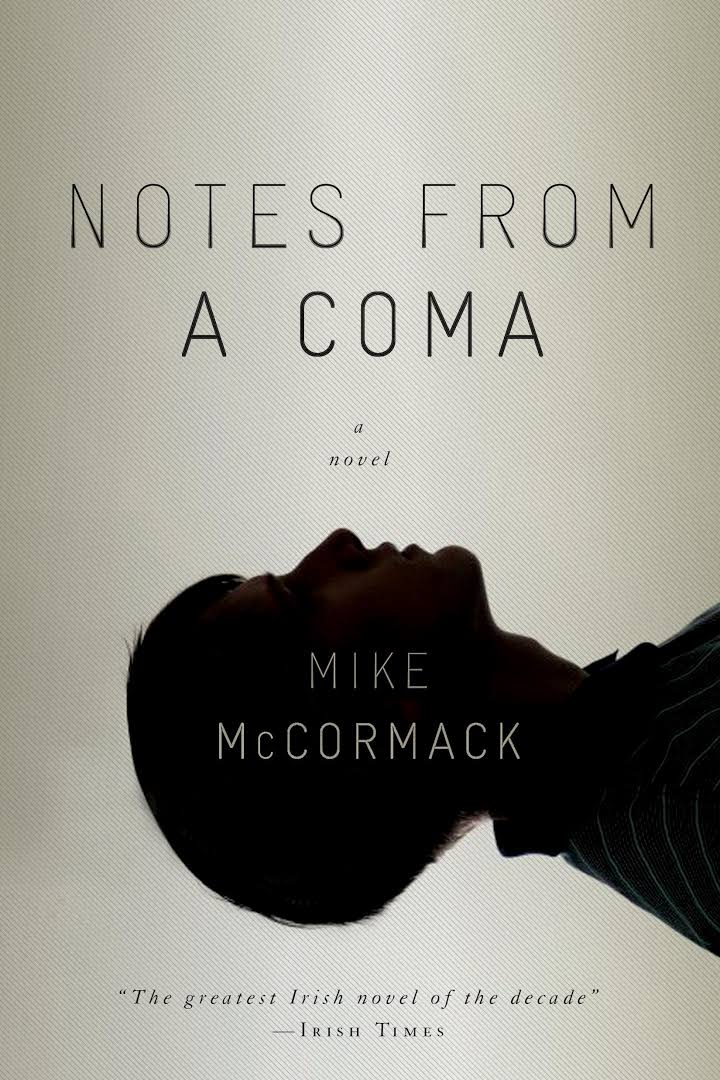
Using Mike McCormack’s Notes from a Coma and Louise O’Neill’s Only Ever Yours, two contemporary dystopias, we can expand upon how the pariah of dystopian literature deconstructs social norms. Both texts use their protagonists, JJ O’Malley and frieda to subvert and alter the traditionally totalitarian image of society as JJ is the Romanian adopted son of Louisburgh farmer Anthony O’Malley while frieda is a student of a future patriarchal dystopia where even women’s names are not entitled to capital letter’s let alone autonomy . What both texts also have in common and further aligns their pariah figures, is the role of technology in their formation as world redeemers. While Campbell alludes to the dystopia’s pariah acting as world redeemer for the reader, this status is not formed purely by their subaltern status. Donna Haraway’s “A Manifesto for Cyborgs: Science, Technology, and Socialist Feminism in the 1980s” is crucial to the creation of these salvation figures, or world redeemers as both JJ O’Malley, protagonist of Notes from a Coma and freida of Only Ever Yours are cyborgs. What is meant by the definition of cyborg in relation to Haraway’s work is that both figures are:
“a hybrid of machine and organism, a creature of fiction. Social reality is lived social relations, our most important political construction, a world-changing fiction” .
Their lives are connected through technology to the point that they become inseparable. At the same time, their connection to technology allows them to engage on a level of social awareness where they can begin to question the totalitarian state. The connection the cyborg has to the world redeemer in the dystopia genre relies in this social awareness, an awareness in which the protagonist becomes attuned to the polymorphic reality of existence. In doing so these figures become as Campbell attributes “utterly free of such ego-consciousness” attributed to totalitarian order. Haraway confirms the higher plain of existence attributed to these world redeemer’s as she states that:
“The cyborg is a creature in a post-gender world; it has no truck with bisexuality, pre-Oedipal symbiosis, unalienated labor, or other seductions to organic wholeness through a final appropriation of all powers of the parts into a higher unity”.
Any relative knowledge of the dystopia genre would attribute the advancement of technology and the creation of the cyborg as a signal for the end of humanity and the forewarning of the apocalypse. This is always viewed in a tragic light as humanity’s invention of machine is attributed to their eventual downfall:
“In a sense, the cyborg has no origin story in the Western sense; a ‘final’ irony since the cyborg is also the awful apocalyptic telos of the ‘West’s’ escalating dominations of abstract individuation” (Haraway).
Such as representation of machine as harbinger of the apocalypse relies on Darwinian logic in order for its existence: Machine must topple man due to man’s inferiority. Yet this interpretation is often misleading of the potential role of technology as these texts prove how this alternate interpretation of the machine can aid the protagonist in realising the flaws in a dystopian society:
“Perhaps that is why I want to see if cyborgs can subvert the apocalypse of returning to nuclear dust in the manic compulsion to name the Enemy” (Haraway).
Published in 2005 Notes from a Coma’s speculative dystopia sets its narrative two years in advance. It tells the story of Romanian adopted orphan JJ O’Malley’s life through a series of altering monologues that share page space with the Event Horizon’s voice that operate to contextualise the narrative. The narrative is concerned with retelling of events leading up to JJ’s decision to voluntarily partake in an experimental research experiment along with a number of criminals. The experiment is to test out a new method of incubating short term prisoners called the SOMNOS project. The experiment itself is a marker of the dystopian genre, as it is to test ‘deep coma’ as an option for the European Penal Commission (EPC) which relieves the autonomy of the prisoner at the door. The Event Horizon informs the reader that once the program is announced by Kevin Barret there is a reaction from the media asking:
“Wasn’t this a blatant attempt by the state to cull, however temporarily, a whole class of offenders and wash its hands of all educational and rehabilitative responsibilities?”.
Sitting with his girlfriend Sarah after recovering from a stay in St Theresa’s mental hospital due to nervous breakdown, JJ already understands the truth. There is no stopping the experiment from happening due to the EU political mechanisation. Unexpectedly for the EPC there is a reversal of the original intent of the program; instead of producing sedated ineffectual individuals they have created deities. JJ is a representation in his artificial coma of the new human, the cyborg. He is as much man as machine but he is not the hero as tyrant. The celebrity status he undergoes is unknown to him as he lies in a deep coma. McCormack text thus both accepts and subverts Haraway’s belief that:
“The main trouble with cyborgs, of course, is that they are the illegitimate offspring of militarism and patriarchal capitalism, not to mention state socialism”.
The means of producing the cyborg identity of JJ in the coma is brought to reality by a patriarchal capitalist society in the vestige of the EU and the EPC. Haraway is correct in this regard but the project slowly moves beyond this point of origin and towards an altogether differing interpretation of society. As JJ’s face and EEG appears before a crowd at the Witness Rock Festival in the Phoenix Park:
“Commentators aver this was the turning point, the moment when the project decisively renounced its positivist remit and made common cause with a generation anxious to move beyond the cowl and candle, the dry ice and swirling snyths of those faux mysticisms which had replaced a discredited institutional faith”.
As the pariah within the text, JJ does not automatically become the world redeemer until he goes into the coma. The reason for this is that the technological upgrade he receives through the coma, helps JJ to tap into the subconscious of a society, to look beyond what Campbell describes as the “ego-consciousness” that drives the tyrant hero. The tyrant in this narrative is occupied by Kevin Barret who strives and survives off of his status as a TD: a position that he has achieved through votes and public opinion which is driven by big egos. Such figures exist through images and sound and rely on their visual presence through the media to give them authority. Barret’s appearance on the news to announce the SOMNOS coma experiment lends credence to his authority and true lack of democratic choice available to the citizens of the state. This revelation reveals the totalitarian and dystopia nature of the text as JJ tells Sarah:
“By the time people grasp what’s really at issue here those volunteers will be on the broad of their backs sucking three square meals a day through their IVs”.
In contrast the reports given by individuals that they have seen JJ within their dreams offer us in-narrative evidence that he has become a universal subconscious state. An altogether different figure to Barret who relies on imposing state ideology JJ acts as a conduit for the people’s subjective and subconscious ideologies due to his passiveness in the coma with the Event Horizon tells us that:
“More than one person has reported them drifting in on their REMs, turning up in those twitchy moments between sleep and wakefulness when we are especially vulnerable”.
As world redeemer JJ status is actually reinforced by the narrative structure by way of the Event Horizon which represents his technological self while his human pariah half is reflected in the conversations. His pariah status is not due to his time in Louisburgh however but namely his heritage as an orphan from Romania and his mental state. While the citizens of Louisburgh do not shun him for his foreign heritage, it occupies his own identity due to his abandonment and survival guilt. His father Anthony retells how most nights JJ would discuss and mock his own origin due to its tragedy. An orphan abandoned by his mother figure and by chance taken in by Anthony who had bought him due to Romania’s collapsed state at the turn of the nineteen nineties. The hurt registered by Anthony on the face of his adopted son as he tells him:
“You don’t know what it was like. The chaos, the violence, the conditions in those orphanages. You were lucky, JJ”.
McCormack concurs with this interpretation of the dual dystopia as he states that JJ would sit between two dystopias: that of his past in Romania and that of the EPC penal experiment. His time in Louisburgh thus offered as the neutral ground between the two dystopias:
No, I would not think Louisburgh is a dystopian realm – remember JJ has come from a left wing dystopia…only to participate in a kind of right wing corporate, penal dystopia….
JJ’s origins point to a revelation about his heritage regarding the dystopia genre as the man is a child of dystopia. He is Moses in the Basket, or speaking to the more Science Fiction aesthetic of the text, Superman rocketed from Krypton. He is saved by Anthony O’Malley from a dying world, where the Romanian dictatorship under the Conducator and his wife had together “destroyed an entire country” and delivered to Louisburgh. His identity as pariah and eventual world redeemer is thus extraordinarily biblical, his questioning of the constitution in the classroom as a child correlating with Jesus’s overturning of the table in the temple, a sign of the failing of old social order in favour of a new one. JJ’s teacher Gerard Fallon captures this moment of similarity where JJ effectively reveals the flaw in the constitution. Namely that the order of the nation relies on the existence of God for its authority:
“No, this is an interim constitution. It is predicated on the existence of God…Now if God is absent then it collapses and has to be written again”.
This questioning is considered a symptom of a mental health issue, what even JJ refers to as his Mind Rot status. He is still a pariah through this definition of his inquisitive nature which forces him to push and analyse an object to its logical conclusion. What the text is presenting to the readers through JJ and his Mind Rot is a representation of mental health in Ireland, with the combined effort of the conversational monologues and Event Horizon, a this dystopia narrative is offering a window into the stigma associated with such issues. Once he engages in the SOMNOS experiment, his pariah status alters. In fact Kevin Barret and his panel chose JJ based on his otherness quality which separates him from the list of volunteer candidates. An otherness informed by his mental health issues:
“That’s all he wrote, I want to take my mind off my mind…You can imagine after so many screeds of cliché and platitude how sudden and direct this was”.
How we know JJ has accepted the world redeemer status by the narrative’s conclusion lies in the Event Horizon’s description of events after he leaves the SOMNOS program. Sarah, his father and others look on at the figure of JJ emerges onto the slipway in front of the media along with the other volunteers. Yet they cannot not recognise him. These figures who have known JJ longer than anyone struggle to acknowledge him as:
“in the grey light it is difficult to distinguish one from the other. Their pallor and raiment, their sunken cheeks…something in their ordeal has reduced them to a sameness”.
What JJ gives to the reader however at this moment of fear where it seems that the EPC’s dystopia has emerged, is hope. It is he who seemingly stripped of identity has asserted his autonomy in approaching Sarah, his love. His de-gendered appearance is the most telling aspect that JJ has ascended to the status as world redeemer. Campbell’s critique on the world redeemer is a figure that contains both male and female identities is part of their ascension beyond ego-consciousness:
“They emerge always with a certain mystery; for they conduct the mind beyond objective experience into symbolic realm where duality is left behind”.
JJ’s appearance to the reader and to his family and friends on the slipway reflects this symbolic identity.
The figure of JJ offers salvation to both the reader and the narrative on the slipway. Throughout the Event Horizons narrative we have had glimpses of the technological advancements towards a conscious machine as in its narrative. It can achieve these speculations upon the future, the past and the present as McCormack wished for the Event Horizon’s narrative to operate as a circumambient horizon: an all seeing all encompassing space. What this dystopian narrative helps to illustrate then is not merely JJ as pariah, for this status is occupied by the conversational texts, but the pariah status of technology found in the Event Horizon. Seen as a potential ruin of civilisation and not as a potential saviour of salvation, technology acts as the mirrored pariah to JJ’s status as pariah. Their merging in the coma aboard the SOMNOS cargo boat in Killary Fjord offers the merging and equalizing of their status’s resulting in the two textual pariah’s becoming one. What McCormack is attempting to address in his dystopia is whether we will turn our backs on are creation:
“…and give him the cold shoulder? Are we going to say ‘Hail fellow well met’? Or, in this moment of recognition, will we put out our hand and say, ‘It’s good to see you son, what kept you?’”.
The merging of the two pariahs, JJ and technology help to create the salvation figure, a figure that will offer salvation from the anxiety of the twenty first century that believes the future is only dystopian. That is the true purpose of the dystopia however, to prevent the future as depicted within its text. At the end of JJ’s narrative, we the reader and the textual audience are presented with the answer to undoing the classic scenarios of the imagined tomorrow, “stripping the planet of mineral resources, conscripting our womenfolk into some ghoulish reproductive project”. The merging of JJ and technology into Haraway’s Cyborg is confirmed through Campbell’s insight on the message that the world redeemer delivers to society, a message that elaborates on the social reconfiguration urged by the pariah of dystopia:
The good news, which the world redeemer brings and which so many have been glad to hear, zealous to preach, but reluctant, apparently, to demonstrate, is that God is love, that He can be, and is to be , loved, and that all without exception are his children.
 Man In The Attic
One thought on “Christ Rebooted While the Irish Dream of Electric Sleep: Role of Technology in the Formation of the Contemporary Irish Dystopia Hero. Part 1”