Autism, Science Heroes and how the Marvel Multiverse tried to kill Reed Richards
Brief summary of origin
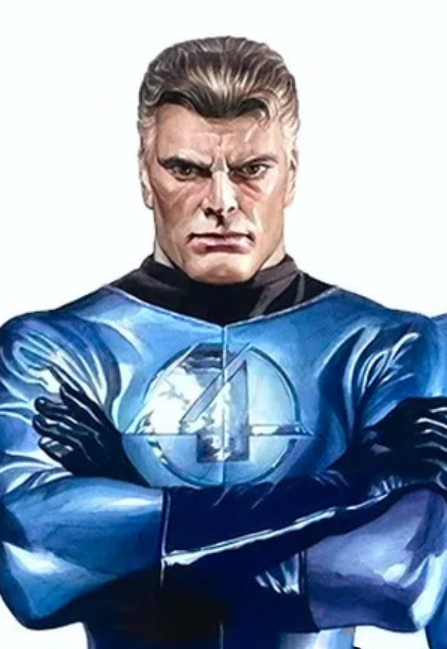
Reed Richards and the Fantastic Four first appeared in Fantastic Four issue 1 in 1961. The Fantastic Four were created by Jack Kirby and Stan Lee and spearheaded the creation of the Marvel Universe. The story follows four astronauts whose space flight goes horribly wrong. These astronauts are caught in a pseudo science cosmic wave, changing them into superpowered beings. The individuals are Reed Richards, Susan Storm, Ben Grimm, and Johnny Storm.
From the outset, Reed Richards is at fault for miscalculating the shielding on the space shuttle and for pushing ahead with the shuttle launch. He will be blamed by pilot and best friend Ben Grimm for his arrogance in much the same way Peter Parker’s arrogance would cause the death of Uncle Ben.
Purpose of Article
This article is an evocative character study on the transtextual treatment of the autistic coded character, Reed Richards the first Science Hero of the Marvel Universe.
Reminder: this is just an interpretation, and texts can be open to many different types of interpretations and that’s the fun of it. There’s never one true narrative. The desire of this study is to offer an alternative view on Reed Richards and his history within the marvel multiverse. An interpretation built on Reed’s coding and his science hero architype and a universe determined to replace, break and destroy him for not being an neurotypical action hero.
Trigger Warning: This Article during it’s study of the Fantastic Four’s history will include examining moments within the narrative that relate to sexism, violence against women, threats of sexual violence and coercion as well as miscarriages.
Due to the length of time since his creation and the nature of the comic book medium, contradictions and tangents exist throughout his interpretation. To keep cohesion characters are boiled down by editors and writers to their essential elements to provide some consistency to readers. This unfortunately has led to frequent portrayals of Reed as distant, arrogant, inattentive to his family, desexualized and as described on social media, a jerk. This largely negative portrayal is due to Reeds neurodivergent coding. The worst of these depictions will cumulate in Reeds darkest hour, the illuminati, and Civil War.
This article sets out to examine how Reed is a complex autistic coded character in the marvel landscape and how being a Science Hero created in the 1960s resulted in his autistic coding.
The article will also explore the Science Hero vs the Action Hero and why the former has inherent neurodiverse coding.
We will discuss how his coding resulted in the long slow decline of his character until Jonathon Hickman inherited the Fantastic Four title in the late 00’s.
Finally, we will then examine how Reed’s desire to be a better example to others and his daughter Valeria led to the characters resurgence.
The focus of this study will be to highlight subjectively key moments to this character history to examine how these moments weave into a story for Reed’s struggle for acceptance against a universe determined to kill him and the science hero architype.
This article will review the following:
- Why is Reed Richards coded as autistic?
- Why the Science Hero is inherently autistic coding?
- Why is Namor import to Reed’s downfall as an ableist hero?
- When did his decline as a heroic character commence and why did it occur?
- How the decline happened?
- Why were the silver age Science Hero’s slowly shuffled off by the comic book universes?
- What happened when we first see acknowledgement of Reed’s autistic coding?
- How did the Ultimate Universe impact Reeds interpretation?
- How did the Illuminati era up to Secret Invasion cause near irreparable damage to the character?
- How did Hickman readjust the character and begin returning the character to his original Kirby/Lee interpretation with modern updates?
- What was the impact following these changes on Reed to the Marvel Universe?
- Time Runs Out: Civil War Redux
- How and why did the Marvel Universe try to kill Reed Richards through Secret Wars?
- The key to Reed’s survival? Valeria Richards. No need for shame.
- Secret Wars: Misinterpreted as the battle for Reed Richards soul but is a battle for what the science hero will be going forward. Each of the four men who make it to the heart have possessed or are Reed Richards.
- Reed Richards.
- To be continued
Definitions
It is important to understand the nature of the comic medium before progressing further in this character study.
Comics are art in the form of sequential juxtaposed panels that represent individual scenes. Panels are often accompanied by descriptive prose and written narrative, usually, dialogue contained in word balloons emblematic of the comics art form.
Comic issues are numbered sequentially and stich together narratives into what is considered canon.
Canon is key to modern comic discourse. What is meant by canon is series of events that can be strung together into an overarching history of a character or world. Most sequential issues of a comic are considered canon to each other. Writers and artists may change but the main characters in those comics are experiences all the stories or events within the pages as part of their own personal history. Comics by their nature operate on a canon/ non canon understanding of events based on what universe the story in set in. An event in that occurred in the main Marvel universe (616) may not have occurred in another, or vis versa.
Retroactive continuity or what is known colloquially as Retcon’s occur when a writer attempts to expand or contract one idea/story element for another. Retcon’s are not restricted to the canon main universe but can also exist in other universes with the Marvel corporate group.
Neurotypical (an abbreviation of neurologically typical, sometimes NT) someone who has a neurotype that fits into the norm of thinking patterns. Thus, the term “neurotypical” includes anyone who is not autistic, and does not have ADHD, dyslexia, anxiety, or any other condition that would be considered neurodivergent.
Neurodivergent/neurodivergence refers to those whose neurocognitive functioning diverges from dominant societal norms in multiple ways.
Masking is a strategy used by some autistic people, consciously or unconsciously, to appear non-autistic. While this strategy can help them get by at school, work and in social situations, it can have a devastating impact on mental health, sense of self and access to an autism diagnosis.
Why is Reed Richards coded as autistic?
The origins of Reeds coding
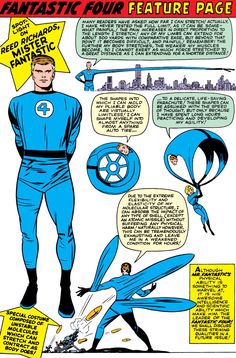
Jack Kirby imagined Reed as a scholarly individual, a scientist. As far as character archetypes go, Reed is what can be called a Science Hero. To explain what a Science Hero is we must first understand two things. The Jungian architypes of the Hero and the Wizard as well as the context in which the Fantastic Four was created.
To start with the context of their creation we must consider the real world as well as the comic book landscape that existed prior.
The race to space and the moon is thriving in the real world of the late 50s and early 60s. There is a zeitgeist for the dreams of the future world and the wonders of travel and inventions. We can see these influences in the first issue of the series. But there is also an attempt to draw upon the older science fiction comics prior of the 40s and 50s that is built into the DNA of Fantastic Four. The most prominent influences being the comic strips of Buck Rogers and the Timely Comic android hero, and first user of the title, Human Torch.

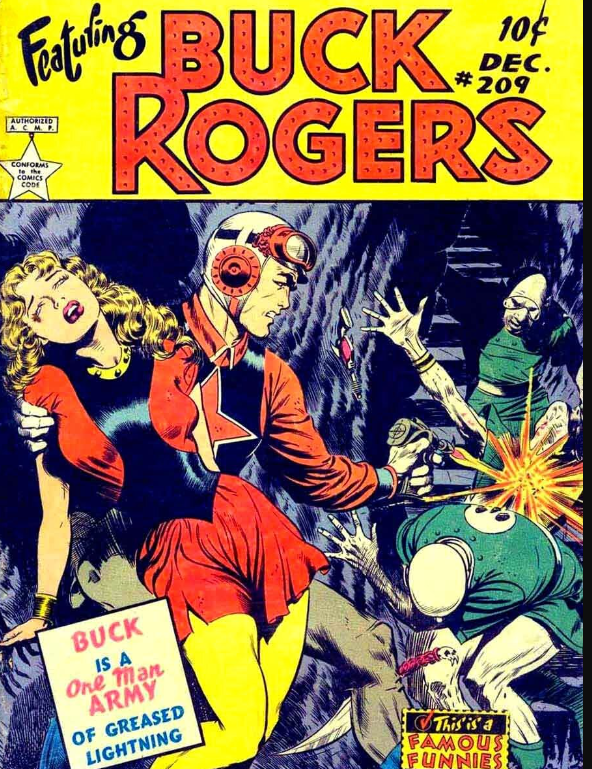
Brilliant science fiction comic book covers of Buck Rogers rescuing a blonde woman, who could be mistaken for Susan Storm, are common occurrences. Buck Rogers was the solider, the man of action lost in time, who communicates in a visual medium of comics through action and violence. While Timely Comics, the precursor to Marvel comics, published the Human Torch, Captain America and Sub-Mariner. Three heroes who conform to the reactionary Hero or more appropriately for comic books action hero architype. Their adventures all involve reacting to events beyond their control in an attempt to restore their understanding of order. Two of these heroes though would be created by the wizard architype or more correctly identified for comic books as the scientist architype, the android Human Torch by Professor Phineas Horton and Captain America by Professor Reinstein.
The creation of the Fantastic Four and their world pulls from these influences and recreates and updates the aesthetic, but at its core the new Marvel universe as seen in issue 1 is still a world that communicate through action and violence.
There is one flaw, one error in the creation of this Marvel universe. Reed Richards, the focal point, and leader of the Fantastic Four, isn’t Buck Rogers. Instead, he is Dr Huer, Professor Horton and Professor Reinstein the supporting cast member to Buck Rogers. He is the wizard. The Scientist architype.
Dr Huer was the older man, the scientist, and the instigator of some of Bucks missions. Dr Huer was the man of logic in the Buck Rogers cast. We see this juxtaposition in Reed’s character early on where he oscillates from working in his lab to working in the field of combat. Reed’s scientist architype isn’t meant to lead the narrative; he isn’t meant to romance the female lead. By thrusting the methodical scientist archetype who spends his time in the lab into the lead role, Lee and Kirby create a character at odds with the world he exists in.
We can see this tug of war between Reed’s desires to work in his lab vs what his world expects of a lead character in a comic book through Susan (Sue) Storm. Sue Storm would go on to become Reed’s wife as the story progresses, but it is telling that she loves and expects the man of action in these early issues. This is what the social norms of a comic book society expect. She dislikes the scientist who spends his time in the lab, the man Reed is.
The scientist archetype generates the plot for the hero by pushing the boundaries of their society. The morals of their actions can be questionable, but they provide the plot for the action hero to react to fulfil their narrative role. Prior to Fantastic Fours publication, we can see this in older comic titles like Superman where Lex Luther as the scientist creates the problems that superman must solve.
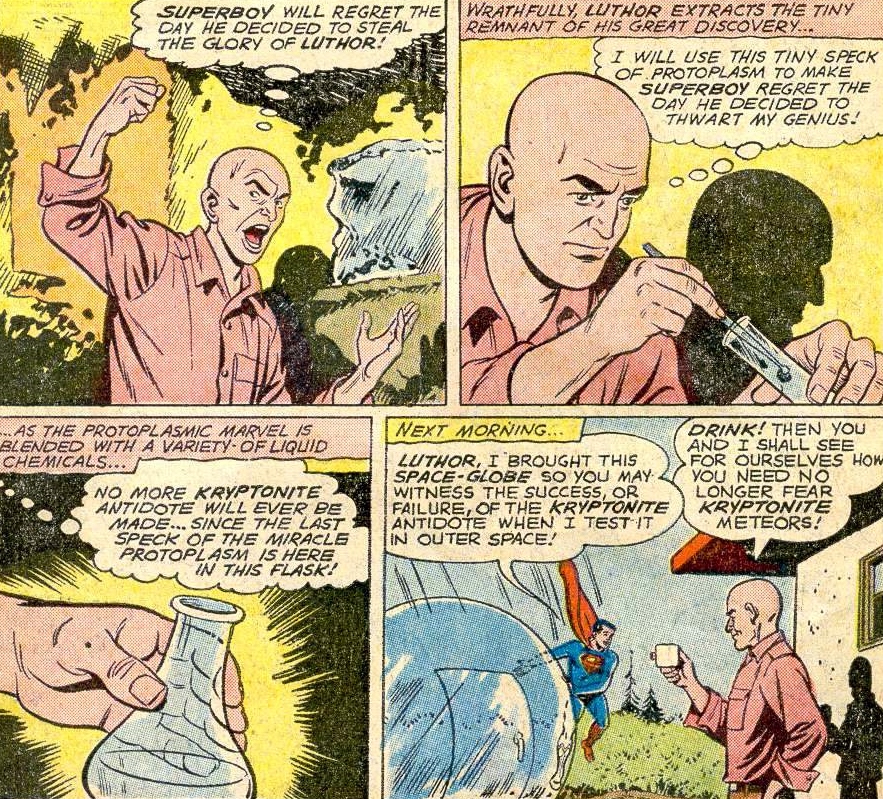
Science Heroes are created when the scientist archetype is thrust into the leading role usually occupied by the action hero. The science hero must not only generate the plot but must also clean up the mess they create or discover. In short, the science hero is the Jungian Explorer architype. They push at the boundaries of society. Unlike the action hero who is reactionary and maintains the status quo of their world, the explorer is always pushing for ways to escape it even to their detriment.
Because of these differences to the action hero, science heroes are also more likely to have neurodivergent coding then their action hero counterparts. This is because the comic book culture up to the mid 1950s built on the action hero in the leading role who are reactionary and relies on enforcing the status quo. While the Science Heroes is meant to cause the plot to progress. This means that neurologically and moralistically they diverge from the action hero in comic book society. They do not want to or can conform to the status quo. That is their tragedy in this fictious society.
Throughout Lee and Kirby’s stories, Reed always finds a way of solving the problems by inventing something, understanding/discovering something, or if all else fails by physical force. In this manner, Reed’s scientist traits, always come first while the traditional machoism the comic book world expects of him only occurs when he’s exhausted other options. Both methods of plot resolution are what is expected of the Science Hero archetype of this era.
Similarly, we see this in the other notable Science Hero of this era, Barry Allen; the progenitor of DC comics resurgence in the same way Reed led the way for Marvel comics. He too is at odds with the comic book society he inhabits as his love interest, Iris West, much like Sue Storm, is also irritated by his time working in the laboratory. Previosuly, heroes such as Superman would earn the ire of Lois Lane for his actions as Superman, not in general terms for his time working on a news report. Sue and Iris show to the reader how this comic book society views the science heroes who does not conform to the social norms around them that are expected. Their time invested in their own interests are seen as a distraction and unnatural to what is expected of the main star of a comic book.
It should be noted that Reed suffers from the misogyny of writers from this era and engages in misogynistic moments/dialogue with Sue Storm. Sue’s various feminist evolutions from her first appearance into the current leader of the Fantastic Four is well documented by others and won’t be the focus of this character study.
I believe the merging of the supporting or antagonistic scientist character archetype into the role of the lead hero by Kirby/Lee resulted in Reed becoming what we now understand as coded with autistic traits. It should be noted that intelligences shown by characters in comics does not equate to autistic coding. What we see through the science hero archetype of the mid-twentieth century are individuals interested in things beyond the typical portrayal of the superhero of their era. This puts the science hero at odds with what is neurotypical of their society.
Reed is a scientist, an explorer at heart, but he exists in a medium of the action hero archetype. His world expects him to rise to action like Buck Rogers, but Reed is rooted in the scientist archetype, Dr Huer, who pulls against it. And this will over the course of the next forty years result in the character being torn between outer expectations and his inner needs resulting in a variety of mishandling, misunderstanding and abuse by his friends and family for not conforming to the superhero societal norms.
• Why the Reed the Science Hero is inherently autistic coded?
First Steps
To begin with it is important to understand that in portraying and discussing autism or neurodivergence in fiction there is a danger in stereotyping what is a very complex and often uniquely individualistic set of traits. In our discussion and analysis, we will see how the comic book landscape interpreted at first unintentionally and later intentionally these coded traits.
What we are discussing here is a fictional characters coded autism. In fiction, autism is codified through a series of common traits or characteristics that were related with autism. While this does provide an oversimplification of autism, it does allow for us ask a series of questions which we should ponder as we continue with our analysis. What we must consider as we progress is how autism and neurodivergence is viewed by comic book society. In this case, Reed Richards world.
How do they treat him?
How is his autistic coding viewed?
Once this coding is acknowledged, how is Reed’s autism portrayed and is it a positive or negative portrayal?
To start, let’s set the parameters of what we define as Autism. The following is taken from the Irish Society of Autism. It should be noted that these are the most common characteristics. Each person who is on the spectrum may differ, but for our analysis we will use the below as a guidance.
Autism
Autism can affect the way a person thinks, communicates, interacts, and experiences the world around them. Autism is referred to as a spectrum, and it affects different people in different ways.
Common Characteristics that Autistic People May Share
• Differences in Communication Style
Some Autistic people might communicate verbally, some may use non-verbal methods of communication such as pictures/images or technology, and others may use their hands or body to help them communicate or express emotions.
• Difficulty with Social Interactions
Some people with Autism may appear to have difficulty with reciprocal conversation or find it difficult to express or understand emotion. This can sometimes lead to misunderstandings and may lead to difficulties maintaining relationships.
• Sensory Processing Differences
Some Autistic people can have sensitivities which mean that they may not see, hear, or feel things in the same way as others. An overload of sensory input may lead to a feeling of being overwhelmed and may cause anxiety in some people with Autism.
• Repetitive Behaviour & Special Interests
Some people with Autism need and find comfort in routine. If things change unexpectedly, it can be upsetting. Some people with Autism can have interests or hobbies that can appear unusual to others and may want to know everything about a particular topic.
If we take Lee and Kirby’s stories as an example, we can filter Reed through these parameters for review.
Differences in Communication Style
In Stan/Kirby’s writing and artwork we see Reed struggle to communicate with Susan. She expects him to meet the understood social contract of love and marriage (with its inherent 60’s sexism). What is evident is how much Reed loves Sue but struggles with neurotypical expressions that is expected of him in his world. Instead, he creates inventions to express himself, he misreads her communications and shares his special interests with her. He doesn’t explain his thought process to the others when he speaks and is prone to snapping at others especially during tense occasions. None of which is neurotypical for the lead role in a superhero comic.
- Difficulty with Social Interactions
Reed is seen to be constantly caught up in his work and under an ableist reading he comes across distant, uncaring, and rude. It is notable however that Reed in most of these instances, once chastised by Sue, realises that this is unacceptable behaviour and apologies. Reed doesn’t understand how to be social, and we see similar situations play out on several occasions throughout the Kirby/Lee issues. He runs to her rescue and puts himself in harm’s way for her but at times can’t express verbally how much he loves her without admonishment from Sue. During an important moment in the love triangle dynamics of Sue, Prince Namor and Reed we see Reed build three machines. One to help Sue find Namor to settle the triangle. A second to improve Sue’s powers which, according to Reed, will make her the star of the Fantastic Four and the other to show what he cannot verbally communicate. That he has deep passion and desires for Susan.
- Sensory Processing Differences
Reeds powers are to stretch his body into a variety of ways. His powers visually show how he interrupts the sensory inputs of the world differently. Other characters who display neurotypical behaviour make Reeds powers seem odd and out of place. It’s a visual representation of how Reed processes the world differently. It’s also worth noting that we first witness the negative zone through Reed, and it is here that we see how Reed interprets it. A space unlike any other in the comic. A sensory overload where if not for the intervention of the man posing as The Thing, Reed would have died.
- Repetitive Behaviour & Special Interests
We can see from the various comic strips that Reed’s special interests and repetitive behavior relates to his studies in science and a desire to fix things/problem solve. He spends an unusual amount of time in his lab for his societies expectations. But his time in the lab could constitute an attempt to engage in repetitive behavior for emotional regulation. It is also worth noting that another special interest that Reed has is his friends and his family, particularly his wife Sue. Although due to his coded neurodivergence and as with the other main points regarding autism he struggles with expressing this in neurotypical ways that society expects.
Why is Namor import to Reed’s downfall as a science hero?
Namor, the neurotypical hero
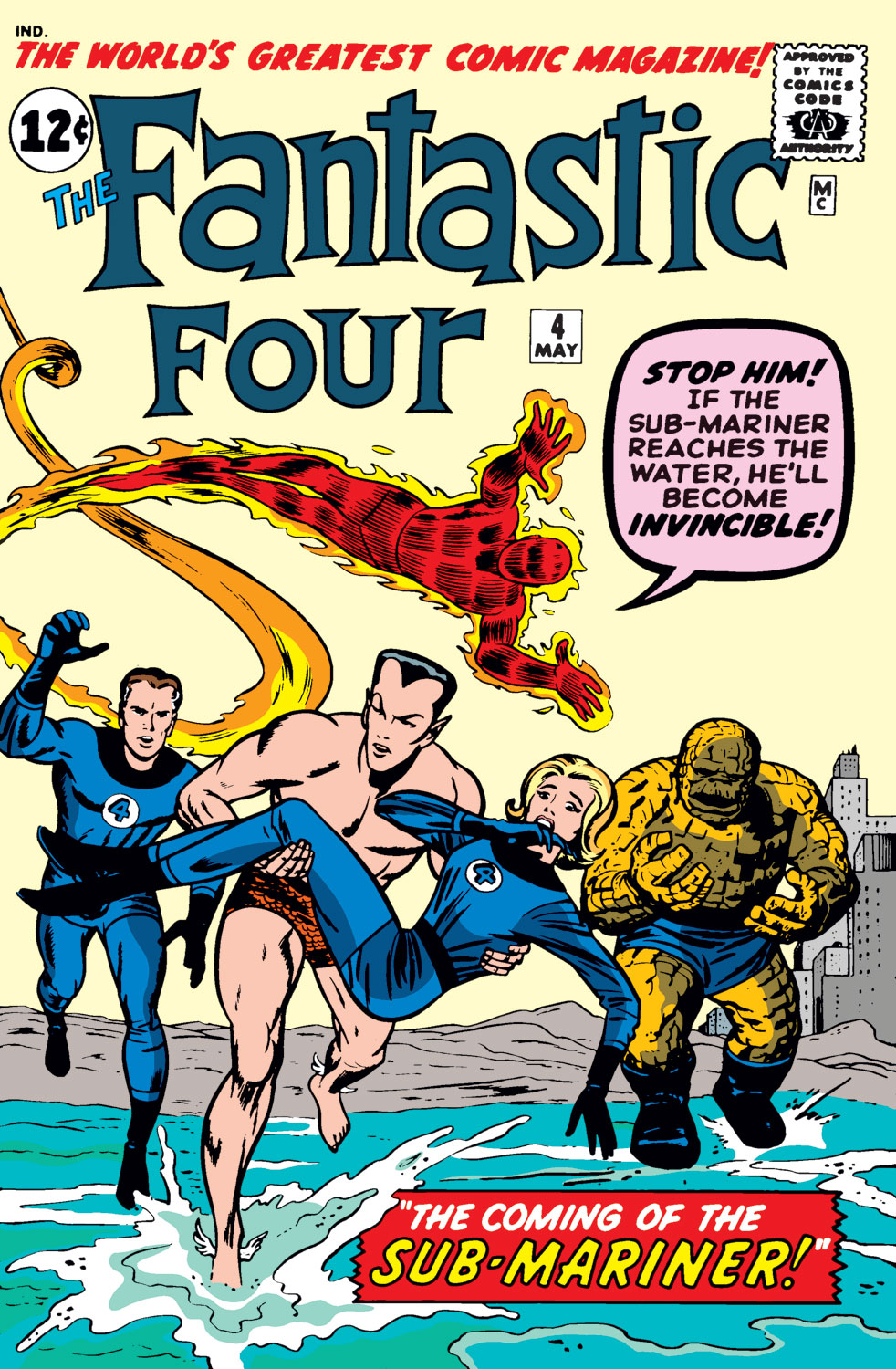
Lee and Kirby’s introduce very early on a love triangle between Reed, Sue, and the prince of Atlantis, Namor. While the first issue of Fantastic four refers to Susan and Reed being engaged or later as boyfriend/girlfriend the romantic pairing is dropped by issue two. From a textual reading by issue two, Lee and Kirby have retconned out the Sue and Reed relationship. There are no instances of either referring to each other as darling or honey that would become the norm later during Lee/Kirby’s run later. This is confirmed by Lee in the letter’s column of issue seven when he confirms that Reed and Sue were just good friends at the start of the story. This is a retcon of the events of issue one. It is also a retcon that is often forgotten but as the years pass it will hamper all three characters in how we interpret them from the original intentions of Lee and Kirby.
In fact, for the first few issues, it is Ben who implies his feelings for Susan, not Reed. In Issue four Namor is introduced, a very early proto anti-hero, but one full of masculine coding and based on the Hero Archetype. This is Buck Rogers, a man in slumber who is awoken to a changed world. We see Sue becoming infatuated by him and it’s apparent that they are courting/dating by issue six and issue nine but possibly break up by the end of that issue. Issue 107 of Strange Tales written by Stan Lee reveals however that Sue keeps a picture of Namor on her table stand as Johnny informs the reader that she still holds a torch for the Sub-Mariner. Buck Rogers has arrived into the Marvel universe.
It is in issue 10 that we see Reed mention that he thought Sue liked him. It is noticeable that Reed waited until after she and Namor have broken up to tell her this. As it highlights that Reed respected the relationship between Namor and Sue and didn’t communicate his feelings until after the relationship possibly ended. Later works will ignore the retcon of issue 2 and infer that Reed didn’t pay attention to Sue and her desires before Namor’s arrival.
The remainder of the issue 10 acts as a closer look at Reeds troubles with communicating as his brain is switched with Doctor Doom. We see Reed desperately try to communicate with his team mates only to be met with rejection. It is notable that the person who attempts to save Reed in this issue is Alicia, Ben’s girlfriend who is blind. She recognizes a warmth to the body swapped Reed by using her hands, her method of communicating with the world that the others do not use. Two people who struggle to communicate in a world not built for them.
Issue 11 reveals that Reed fought during World War 2 behind enemy lines and thinking of Sue helped him mentally survive through the War. Again, we see that Sue is one of Reeds special interests and the thing that keeps him calm during times of high anxiety.
The love triangle of Reed, Sue and Namor was very much built around the classic romance such as Jane Austen if we acknowledge the retcon from issue 1 to issue 2. Reed as the Mr Brandon or Wentworth figure who struggle to convey their emotions to the female lead. Figures who are passionate beyond many but simply struggle to express themselves. While Namor is all passion but without control it results in liabilities and a sense of selfishness. There are also rooted otherness/racism to how Sue views Namor which is problematic but falls outside the scope of this character study.
What we see following Reed admission to Sue in issue 10 is the potential masking of his scientist hero identity, his autistic coded behaviors, under the guise of the action hero. Dr Huer acting as Buck Rogers. Sue fell passionately for Namor in that role and Reed tries to enact, engage with hero life by suppressing his autistic coding. He becomes more manic after Sue’s romance with Namor, more a man of action then before. We can see this in his physique as over the course of Kirby’s tenure, he grows in muscularity. A very different look to his appearance in issue 1. This is following Namor’s departure, and we can see the toll it has on Reed attempting to change himself for Sue throughout the run. He has many successes and triumphs, but they are all undercut by his interpersonal relationship issues with his family and friends who view him as the action hero and roll their eyes at his science activities which emblemize his neurodivergent coding in a world of neurotypical action heroes.
When did Reed begin to fall from masked Science Hero back to Scientist commence?
Stories Post Lee/Kirby. The Mask slips.
Once Lee and Kirby leave the title, we begin to seethe struggle to balance Reed’s character. The manic behavior he exhibits becomes more erratic over time from the strain of hiding his autistic coding until finally, Reed’s mask slips.
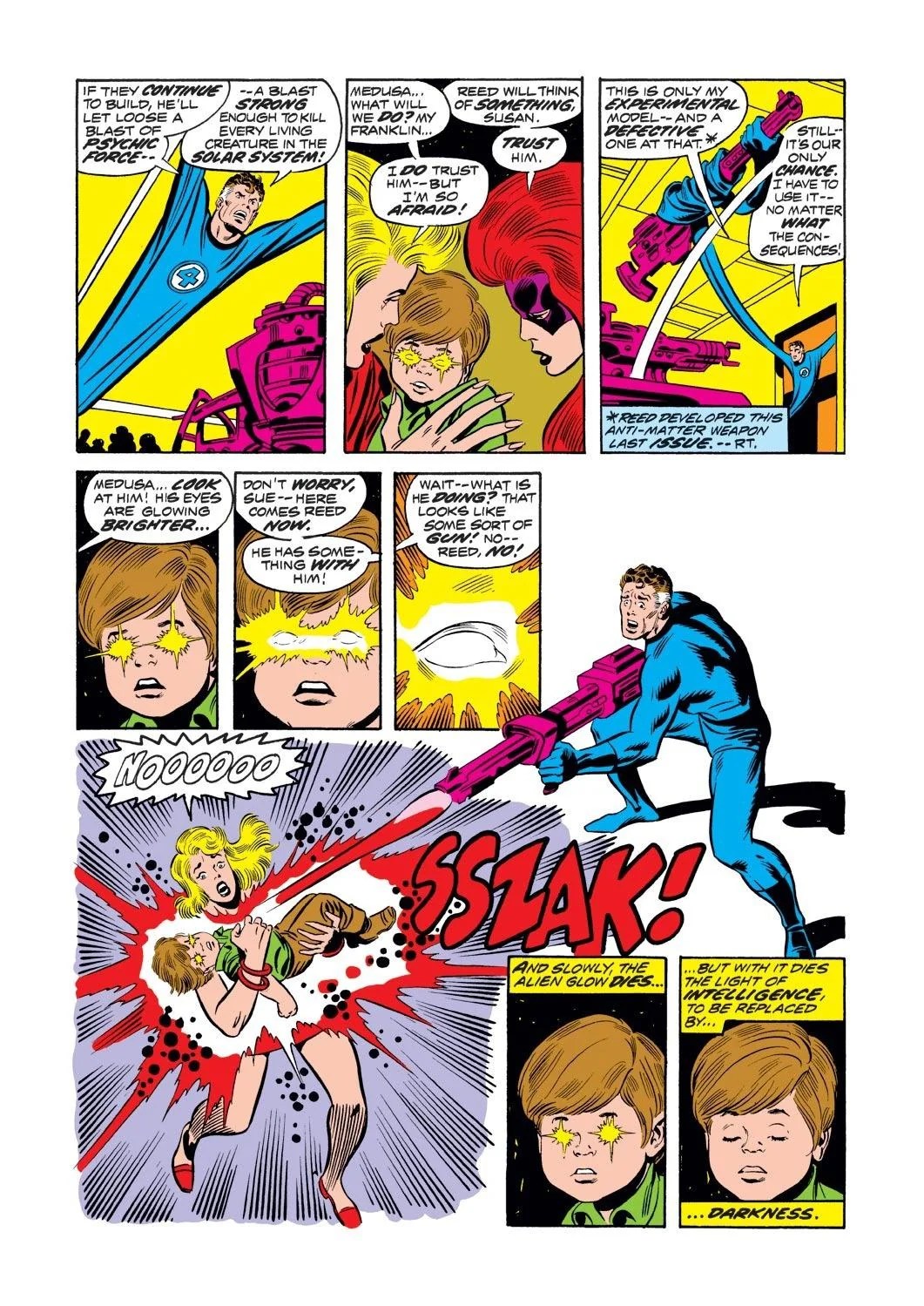
Sue’s separation from Reed is an early example of writers exploring Reed and how through a neurotypical gaze his autistic coding makes him a poor husband, father, and friend. It is here, during these stories that Reed’s attempts to mask his autistic coding slips. In a desperate attempt to save the world, Reed acts without discussion with the others and causes what is akin to brain damage to his own child, Franklin Richards. Sue admonishes him and Reed tells her to leave, and they separate, leaving Reed in a tailspin. We see how he is suffering but can’t convey how he is feeling to anyone. Instead, he tries to return to his routine of working in the lab. We see him act out and destroy his own lab. A frustration at his own character. In this moment we see that Reed hates himself. He hates who he is. He is ashamed.
Sue separation from Reed in the 70s brings her into the arms once more of Namor. The action hero architype. The neurotypical male of the superhero world of comics. Sue rejects Reed and does not understand him. She believes he does not love her. He can not communicate it to her. So instead, she issues divorce papers and works with Namor to take revenge. The science hero must die. This is the first instance of Sue’s anger at her neurodivergent husband overcoming her. It takes Ben to explain to Sue that Reed doesn’t express his feelings like everyone else.
Ben exposes Reed as a science hero, as neurodivergent in an action hero world. Reed is a side character thrust into the main character role of comic books. Sue realizes that Ben is right, and she states that she doesn’t want the fantasy of the action hero, but she wants Reed the man of science. But the damage has been done. Reed has been exposed to not only Sue but to the Marvel universe at large that he is Dr Huer not Buck Rogers.
The marvel universe now sees him like a cancer and begins its slow attempt at killing Reed by a thousand cuts.
The couple reconcile following this reveal and Franklin recovers. It is also revealed that Namor was working with the Inhumans to reunite the couple. It is notable on this occasion that none of the Fantastic Four are aware of this deception until later. This would start a cycle over the years of Sue leaving Reed or being tempted away from Reed in favor of neurotypical men whenever Reed is weak, fails or goes missing.
The separation and reuniting of Sue and Reed is the moment Reed begins to become this socially detached character. The fantasy is broken. He is a pariah. The science hero dies in this moment. Going forward in general trends after issue 200, Reed will initiate, progress, or resolve plots but unlike the Science Hero, the explorer, he increasingly fails in solving his own problems. Instead, the other members of the fantastic four will continue to be the action heroes while Reed is relegated to scientist architype. A lead hero no more.
Namor after Sue and Reeds separation will always appear at Reeds lowest, when his life is collapsing. Namor is what the Marvel universe wish Reed to be. The fantasy. A leading man. An alpha male. Buck Rogers. They write Sue swooning when he is near. In doing so they slowly remove and detach Reed as unsexy, unromantic. She may love Reed, but she is attracted to Namor. How could Reed, a man coded as autistic through his scientist archetype, be with this woman who expects the neurotypical action hero.
How the decline happened?
Wolfman
Marv Wolfman introduces the next cycle following the separation when Reed’s powers disappear. Reed and Sue decide to leave the Fantastic Four and instead of continuing his explorations as a Science Hero, Reed goes to work on a secret science project. Reed is supportive of Sue resuming her acting career, but it devolves into Namor and Sue secretly discussing how they feel for each other, all the while Reed is being ensnared in a trap. Reed still manages to escape this predicament, return his powers, and save the day but the cycle has begun to scrap away at his life. Namor is no longer trying to help Reed and Sue. He is determined to usurp Reeds role as leading man.
Byrne
John Byrne would continue the slow humiliation of Reed as he introduces the massive age gap effectively decoupling the couple. Sue is now young and alive. Reed is old and weak and obsessed with his work.
Reed has completely lost his hero archetype mask at this point and is now no longer a Science Hero but a Scientist architype. In the micro world of issue 236, Reed is a professor, not an explorer. We see Reed lose his Kirby physique and his appearance becomes frail. With his physique gone and in line with the science archetype of comics he is visually older. He no longer looks like he belongs as the lead in a superhero comic. This is strengthened by Byrne increasing the age gap between Reed and Sue as Sue takes focal point. She is no longer the damsel to be saved and becomes the action hero archetype. While Reed is the scientist architype.
The cycle repeats. The marvel universe that was founded on Reeds ill-fated flight is slowly sending the man into decline. Reed is captured and tortured for saving Galactus. The last science hero, the last explorer of a previous universe that has become a being focused on consumption. Namor and Sue share a kiss while Reed has been captured and tortured. Instead of worrying about her husband, Sue is angry Reed is missing. Her transgression of kissing Namor is accepted by those involved as a neurotypical behaviour of action hero archetypes who rely on physicality to communicate. Namor and Sue are passionate. Reed is absent. She wanders through the Baxter building expecting him to be in his lab. The physical manifestation of his neurodivergence. Sue is angry at Reed for not appearing even though the audience knows he has been captured. Blaming his scientific work. His special interest. His neurodivergent behaviour. She expects him to be in the lab. While in space Reed has been captured and tortured for performing the scientific act of saving Galactus when this universe of violence expected him to let Galactus die.
Sue’s miscarriage and the failure of Reed’s science to save their child, who was conceived in the negative zone, is a deeply sad moment. It is also the moment when Sue turns against Reed. For even if the fantasy was broken, she could accept his scientist archetype, if it had utility. Here it fails. This anger and resentment that she has to Reed and his failings accumulate with Sue’s turn to Malice. A male gazed manifestation of her anger. Malice states how much she despises Reed. Reed’s only way to alleviate the anger is to raise his action hero mask once more and communicate through the language of superhero comics emotion and physicality. Her anger and violence against his acted anger and violence. This provides only a stay of execution for Reed from her anger, even though Sue returns to her senses. As Malice would return, and the Marvel Universe would continue to send Reed into decline.
Sue’s anger at Reed for not being more sympathetic to her, for not showing more emotional awareness following this highlights Reeds poor communication and social skills. What it also highlights though is how poor Reed is treated by his friends and family whenever he has previously been psychologically manipulated, replaced, or loses possession of his body to Doom, Molecule Man or replaced by evil versions of himself.
Claremont
Claremont’s crossover book for the Fantastic Four and X-men examines Reed and attempts to position that the cosmic ray accident may have been purposefully carried out by Reed. This nearly destroys the team and Reeds loving nature is witnessed silently by Sue as Reed plays with his son. But the concept that Reeds Science archetype may be morally grey are first introduced here.
Simonson
Simonson’s run offers a brief return to Lee/Kirby’s Reed Richards as a Science Hero. His neurodivergence shown for its benefits as the heroes navigate worlds unfamiliar to them. He is never truly trapped, nor does he remain in his lab. He is out in the extremes of the universe pushing against its boundaries. We can see in his physique a brief cross between his Kirby and Byrne. There is a shadow of who he was. Reed notably stands up against the government on superhero registration in this run but by the time we reach Civil War his character will have been so reduced he sides with the act in that event. Simonson’s work would merely be a blip in the trajectory of Reeds life.
DeFalco
The return of Malice in in 1993s Infinity War and her continued presence in FF marked the slow death of Reed.
She physically, mentally, and verbally abuses Reed for being the science archetype, the bedrock of his neurodivergence. Her outfit becomes more provocative, and she becomes angry that he does not desire her immediately. But Reed is a scientist, a man of logic and rational and we can see how he believes sue is not herself. Previously when Reed was replaced by an evil counterpart, we followed Sues perspective and deductions to sympathise with her. The narrative wants us to focus on Sue through the male gaze and we are meant to side with Sue even though she is not herself.
Reed and Victors deaths in 383 were attempts to remove the science archetype, the neurodivergent from the neurotypical world of the superhero. He is thrown into the past, where he can’t perform any method science to escape. He is trapped in a cave where he tries to recreate his lab. He tries to emotionally regulate. He thinks of his family, of Sue, like he did during the war in order to survive.
In his place, Reed is replaced by Namor. The hyper masculine action hero assuming his rightful place within the world. In the 90s cultural landscape Reed becomes the nerd and in the space of edgy 90s comics he doesn’t fit the mold of a man who could be with Sue. Sue for her part takes on a hyper masculine gaze in her outfit to match Namor’s arrival on the title. The alpha male figure.
Sue and Namor’s unrequited love accumulating in the Sue & Namor kiss in Byrnes’ Namor issue 50. Sue still believes Reed is alive but finds the hero archetype of Namor’s desires for her flattering. As before since their separation, when Reed is at his lowest, when he disappears or is captured, his wife and family are pulled away from him. Sue will try and eventually succeed in finding Reed but in his absence Sue’s attraction to Namor illustrates her true desires. The Marvel universe asking the reader how anyone could love or find attractive a man like Reed who has trouble communicating, has special interests, trouble with emotions and a man of the mind not brawn ever be a lead in a comic book.
Reeds return is also incredibly different from those of his contemporaries of the era. At DC comics, Superman and Batman’s deaths and back breaking result in the glorious return of the hero. Barry Allen’s death in Crisis on Infinite Earths is horrific but because of a noble sacrifice. For Reed, his death is a dirty trick in a moment of compassion. His return by comparison is ignoble. He is trapped and is saved by his family. He returns to a life moved on without him. He is replaced as leader, he is replaced as a scientist by another, Ant-man and Namor taunts him and humiliates him by feigning the end of their fight while everyone else is aware of the act. Like many times before Reed tries to deal with problems on his own and his rebuked like before. Sue admonishing him that she isn’t a housewife anymore by forcefully pushing him back. Again, Sue hasn’t been that character since Byrne so we must ask what is really being debated here? The leadership of the Fantastic Four. Sue’s use of force an alpha male action to show dominance. She is in charge now. There is no apology for how she acted as Malice. She has become the action hero during Defalco’s run. She is now the leader. She is now Buck Rogers. The moral justifications of the team will now stem from Sue’s neurotypical perspective going forward.
It’s notable that Reed’s intervention in what is an attempted rape of Sue by Namor cumulates in Namor feigning defeat. Something Reed misses but Sue understands because she is neurotypical to this world while Reed is not. Sue never admonishes Namor for his threats of violence, his attempts of rape as has been the case since the Lee and Kirby issues. To her worldview, based on the misogynistic male gaze of early superhero comics, they are acceptable. What is never acceptable however to Sue, is Reed’s time on his special interests or his failures in communication. It is worth noting that modern writers and critics have pointed to the inherent problems of violence towards women that historically ran through the comic book medium up to the mid-00s.
Claremont
Following the Onslaught event, Reeds return to the main 616 universe with his family sees the continued humiliation of Reed by Namor. A past lover of Reeds is introduced by Claremont named Alyssa Moy. Moy like Reed is an explorer, a Science Hero. But instead of resulting in a balance of power with Sue and Namor. The love triangle collapses, Sue no longer wants Reed. She loves Reed but her desire to be Namor’s consort in a visual heart’s desire scene. And Claremont leans into the age difference as a stumbling block in their relationship.
Claremont to his credit over his time working on the title and in miniseries is the first to start tackling the problem Reed is facing in this neurotypical world. Because while Sue’s persona had been developed along with changing social norms. Male figures only began to be examined in comics in the late 90s. Reed was slowly softened, and he was given a backstory that showed him as an explorer akin to Indiana Jones. But this is the past, a bygone era. The Science hero is old.
Claremont also introduces a plot where Reed loses his super intelligence and therefore his scientific archetype. He suddenly fits into the superhero world. His wife and family are happier with him, even Reed is happier. And why, he still is intelligent but what he has lost is his autistic coding. Once his super intelligence is restored there is concern that Reed will go back to acting neurodivergent. Why can’t he just act neurotypical?
Sue and Namor flirtatious relationship during Claremont’s work becomes more visibly to the point where Sue doesn’t even hide it. Her heart’s desire it Namor. She partakes in action hero sparing and flirting with Namor throughout Claremont’s stories. Reed is eventually trapped with Doctor Dooms armour and psychologically manipulated and tortured. Once he is free his wife instead of comforting or showing compassion goes to Namor not Reed. The narrative is from Sue’s perspective not from the psychologically abused neurodivergent but from the neurotypical. Reed’s traumas over possessions/ replacements or torture are never explored. At the end the only reason for Reed and Sue to stay together is for the greater family. Her love for him is dwindling.
Pacheco/Loeb
This brief run is worth noting for returning to the Sue’s miscarriage from Byrnes run. Franklin through a pseudo reality and time travel, returns his baby sister to the womb. The miscarriage is no more. Valeria Richards would go on to be born shortly after. But Reed is unable to attend the birth which is not going to plan. It takes the intervention of Doctor Doom to save the baby girl and deliver her. He chooses her name and becomes her godfather. A reminder by Doom to Reed of his failings but it is also the seed of Reeds long term salvation. Valeria will save him and she was delivered by his greatest enemy.
Waid
Mark Waid spent a lot of time working on Reed and reframing him as a tragic emotionally deep figure during his work. Namor never physically appears but Sue teases Reed with iconography of Namor to get Reed’s attention which both Reed and Sue laugh about. Waid pushes this further by having Reeds former lover Moy, another science hero, show up and it’s revealed that Reed proposed to Moy years earlier. An attempt to shift the dynamic away from Sue having all the power in the relationship as a neurotypical to do as she pleases with Namor as previous writers had encouraged. Waid’s work is the first distant rumblings of a revival of Reeds Science hero archetype. This would take another 9 years to develop under Hickman. In the meantime, Reed still has far to fall.
Waid attempts to reassert Reed into the central role would ultimately fail. Reed’s downfall occurs with his scarring by Doom. Sue is never shown comforting him. We see Reed working non stop in his lab. He failed and like that fateful flight, Reed has thrown himself into his special interests to cope. He is trying to fix things and process in a way he understands. Meanwhile, we are shown Sue staring at an image of Namor. Reed’s neurodivergence given negative connotations by the spectre of Namor’s shadow. His coping mechanism is to go to routine, to go to his lab for stability. Sue in turn choses to move out while Reed does this. She doesn’t understand his actions, she doesn’t know how to help, so he is left alone. In heaven, we see Reed become overwhelmed and collapse inwards causing the plain to collapse. His shame, his guilt all-consuming him because he has struggled to express anything in neurotypical methods.
Why were the Silver Age Science Heroes slowly shuffled off by the comic book universes?
By the middle of the 1980s Science Heroes were slowly being removed from the comic book medium. The disabled Doctor Donald Blake, the alter ego of Thor, is snapped out of existence leaving only the able-bodied Thor. Iron Man is replaced by Rhodey for a time. Bruce Banner becomes Mr Fixit and doesn’t reappear as his human self for nearly a year. Spider-Man is replaced by Ben Reilly. The most significant for Reed however was the death of Barry Allen in the seminal Crisis on Infinite Earths. It’s significance to Reed is based on the simple understanding that Barry Allen was the hero who restarted DC comics and launched the silver age. Barry was replaced by his sidekick and neurotypical action hero archetype, Wally West. In society, the heroes of the 1980s and early 90s were hyper masculine action heroes, who predominantly were portrayed as men of the common people. The Science hero of the 1950s/60s didn’t fit in with this culture. Reed will watch his world become grittier and more hyper masculine gazed. Reed would not be killed until 1993 but it would be the Infinity War event where his death was assigned. During the conflict Sue would merge with Malice once more and we see how over the next few years she treats her husband until his death and her interactions with Namor after. Her abuse is aimed at his neurodivergent behaviour and his science architype. Neurodivergence is a weakness in this hyper masculine world. Like Barry, an imposter will return to pose as the lost hero. And like with Barry, the imposter, the stand in for the hero is vanquished, leaving only the neurotypical hero to continue. Wally and Sue. Once Reed returns, he is a broken man. A shell of who he was during the Kirby/Lee era. There is no hero left.
What happened when we first see acknowledgement of his autistic coding?
The Autistic Robot and the collapse of Morals
The 1980s-2009 is the long slow degrading of Reed Richards because he is coded as Autistic. In the real world, the autistic rights movement gained momentum in the 1990s but it wouldn’t be until 2001 that Grant Morrison acknowledges the coding in his miniseries 1234. Sadly, this storyline does nothing to improve the narrative. It emphasises as other will until Hickman the medical neurotypical interpretations of autism which sees it as condition/problem. 1234 isn’t part of the 616 canon but it is the first to acknowledge Reeds autism. It is also the summation and template for how the marvel universe has treated and will treat his neurodivergence, his scientific archetype until Johnathon Hickman’s work on Fantastic Four.
In 1234 Reed is dehumanized. He becomes the trope referred to as the autistic robot. A trope to evoke otherness within the fictional world. It is the removal of emotions, of empathy and as we reach civil war, the removal of morals. This is autism as understood in the early 2000’s. They are logical, arrogant, distant, and dismissive. What we see from the early 00’s onwards is Reed’s alexithymia. A condition that is not just associated with autism but within some members of the wider neurodivergent groups. Alexithymia, also called emotional blindness, is a neuropsychological phenomenon characterized by significant challenges in recognizing, expressing, sourcing, and describing one’s emotions.
Reed spends most of the narrative in an isolation tank for most of the story while wires and rods protrude from his body. He is more machine than man. Sue in the narrative is angered and disdainful of his neurodivergence. It is a burden to her. We know this because she worries about him once topic of autism is discussed. Reed’s autism is a burden. Namor appearance and presence is neurotypical. He is almost naked, and portraited with a sculpted physique. He is animal. Reed is robot. Reed is absent and de humanised. We see Sue talk more about Namor then Reed and how society raised her to be with someone like Namor but she fell for Reed. The story climaxes in Sue and Namor kissing passionately while Reed is embraced by Sue later like a child.
We witness following this first acknowledgement of Reeds autism not a celebration of neurodiversity but instead the long que of able men who swoon over Sue one after the other as Reed looks on. Reed is seen as unworthy of her love. His autism is seen as character flaw and character identity.
Marvel Knights 4, a title whose canon is debated, is a damning indictment of Reed’s autism. The title itself sees Sue flirt with Namor once more but this time Reed appearance is unexpected, he appears visibly hurt as he holds flowers for his wife. Reed asks Sue why she keeps flirting with Namor, but we never hear Sue’s answer. Instead, Namor say it is to do with animalistic passion, something this world associates with the action heroes of Namor and Sue. This world treats Reed as emotionally unavailable; he is treated as nonhuman or like a robot.
Issue 23 of this title marks the 40th real world anniversary of Reed and Sue’s marriage. A story in which his wife and his friends openly talk about why Sue doesn’t or hasn’t cheated on Reed. Reed is absent for most of the story and again the cycle continues as we are regaled with how T ’Challa and Sue almost cheated on Reed because he got caught up in his special interests. While the issue starts with Reed poorly communicating his romantic intentions, he is off trying to persuade an alien race to give him a gift of flowers that his wife and once seen and loved. The story finishes with the couple together embracing each other. But the ending cannot remove what we witnessed before as Reeds social network and his wife showing disappointment in him for his ‘work/science/fixing things’ all outward manifestations of his neurodivergence.
In 2012, Fantastic Four, Season One, an alternate universe retelling of the team’s origin openly talks of Reeds autism. However, Reed in this universe states in the same breath that he is autistic that he is working on a cure. Autism is an illness, a problem. Reed in this world conforms to the neurotypical world and wrongly believes he is ill. That what he is, is broken.
In Peter David’s X-Factor series we return to the cycle of abuse Reed goes through as Sue is captured and placed by Doom in a deepest fantasises device. Here it is revealed that she desires Namor, not Reed. When Sue is rescued, she threatens for no one to tell Reed what had happened. Meanwhile Reed is buried alive, the marvel universe wants to kill Reed Richards, the original Science Hero of the Marvel Universe. He should never have been the leader, he should never have been a hero, he should just die.
How did the Ultimate Universe impact Reeds interpretation and lead to Civil War and the Illuminati?
Separate to the 616 universes, what is known as the ultimate universe, is launched in the early 00s to update and modernise the original stories of the marvel universe. What is notable about the changes made to Reed in this world is that he is no longer the leader of the team. That position is taken up by Sue’s father. Sue is also given the same intelligence levels as Reed. However, Reed is still neurodivergent within the narrative and even visually while Sue is seen as beautiful by those around her, Reed is seen as weak and unattractive. He is a scientist; Sue is the action hero. This is Sue’s story, and Reed is just living in it.
The characters autistic coding is still there and again we see the push to the stereotypical autistic robot troupes of autism. He is arrogant, logic and lacking empathy. It is notable that in this world the process by which they gain their powers also causes Reed to no longer be considered human.
The Ultimate Universe line became widely popular, and it resulted in many characters in the 616-universe adopting the traits of their Ultimate Universe counterparts. For Reed, this resulted following Waid’s time on the character, with the slow crawl towards his Ultimate Univrse counterpart. The arrogance, the logic without empathy all start to filter in. Reed of the 616 universes, who has suffered cycles of abuse is now being poisoned.
The Ultimate Universe Reed will eventually become the villain, the Maker. A twisted dark reflection of everything the Reed of 616 was during the Kirby and Lee era. He is what the Marvel Universe is trying to make Reed of 616 into. He should be a villain and not a hero. The illuminati and Civil War will take him to the edge of that struggle.
How did the Illuminati era cause near irreparable damage to the character?
We see this ultimate universe version of Reed Richards bleed into the 616 character as instead of exploring, Reed retreats further into his lab and further from society. Reed becomes more meek, more logical, his morals are compromised. Reed is being trapped again but this time it is not a cage or a cave in the past, but in his physical manifestation of his neurodivergence. His lab.
The retconned creation of the Illuminati which supposedly existed after the Kree/Skrull war sees Reed join a mostly neurodivergent or disabled group of men who attempt to protect earth for the greater good from future threats. Even here however, Reed cannot escape Namor who is also a member.
In a key scene for this character study, we see Namor admonish Reed for his treatment of Sue. That she is locked in a cage like a bird by Reed like Ibsen’s ‘A Doll’s House’. Namor can’t convince Sue to leave him. He states that she idolizes him. Something that would be further explored in McDuffie’s work but would seem to be untrue based on how Sue has treated Reed before now. Reed states he is aware that she leaves him and goes to Namor when she is unhappy. Namor advises him to appreciate her every day. Namor effectively gaslighting Reed that he is the one who is the villain of this love triangle. The story follows Reed where he returns home to ask Sue if she would like to go on a date and picnic. Showing how Reed followed Namor’s advise. It is worth stepping back from this isolated scene however and examining the story that exists around the scene. Namor, as the ableist and neurotypical member of the Illuminati, the Buck Rogers, has threatened, captured, and attempted to rape Sue before. Sue is not a bird in a cage, she consistently has left and flirted and been tempted to engage in emotional affair with the neurotypical man, Namor. It is Reed who is in a cage. It is Reed who is always trapped. It is Reed who is Nora. Like Nora, society believes him weak, insufficient and something to be humoured by his friends, family and even his enemies. Reed’s cage is the marvel universe that has abused and slowly tried to pull him apart piece by piece for being a science hero and neurodivergent.
Civil War, World War Hulk and Secret Invasion all form one overall story of how the arrogance of the Illuminati leads to their humbling. Civil War in particular tears Sue and Reed apart. Reed siding with the neurodivergent leader Tony Stark, while Sue sides with the neurotypical leader Steve Rogers, another man out of time, another Buck Rogers. Here we see how the influence of the Ultimate Universe has impacted Reed. His compassion and empathy are gone, all that remains is logic and the greater good. He builds prisons in the negative zone, he clones Thor who goes onto kill a hero, he clenches his fist when admonished by Sue and then Sue leaves him. This is not the Reed we have seen throughout the 60s to Mark Waid. Sue even states that this is not her Reed, but this is what the Marvel universe through its abuse and poisoning has twisted neurodivergent Science Hero into, the villain. The science heroes against the action heroes. At the end of Civil War, Sue and Reed reconcile but there, in the middle of the story like the cycles before, is Namor smiling.
The Fantastic Four writers during this era were JMS and Dwayne McDuffie both of whom were hampered by events of Civil War by Mark Miller. Miller who, along with Bendis, created the Ultimate Universe Fantastic Four uses the Richards to add emotional drama and stakes to the civil war story. Reed lies and pushing his family away to save the world and in doing so damaging the character who was barely holding on in the public eye further towards distain. Sue in this case using Namor to get what she wants for her side while Reed writes a love letter akin to robotic jargon hoping she’s come home. Sue does return to Reed and the children, but a lot of damage has been done to their relationship in the eyes of readers at this point.
McDuffie for his part does his best to salvage the characters actions by attempting to lean into Reed’s science architype and state that if Reed did not follow through on the actions, he took society was doomed. Sue’s discovery of this showing the ideological differences in the character as she says they’ll beat the odds without compromising their morals and sides with Captain America. It is during Hickman’s Dark Reign side story that we learn through Reed’s exploration of the multiverse that he was right, not Sue. McDuffie’s writing also sees the accumulation of the narrative that Namor began during the Illuminati minis series that Sue idolises Reed.
In McDuffie’s writing, Sue no longer sees Reed as someone to look up to. We have seen in previous writings that Sue doesn’t idolise Reed. She admonishes him for who he is. So, what is she and Namor really talking about? The collapse of Reeds morals. Reed is no longer a purely good man in the eyes of Sue, and thus in the eyes of society. He is flawed, he is good now but maybe he’ll fall into villainy soon enough. When a future version of Doom comes from the future to warn everyone of Reeds future actions what is questioning is if Reed is a good man. It is notable that Ben is the first to reject the idea, in much the same way he was the one who understood Reed’s behaviour at the time of Sue and Reeds separation. Sue for her part just accepts that Reed is flawed. But again, this is a narrative drive to push Reed, the former science hero, now the just the scientist towards what the marvel universe wants him to be, the villain.
Miller takes on the fantastic four title shortly after, but Namor never appears. Instead, Miller inverts the trope and has Reeds ex-girlfriend Moy attempt to seduce him. Moy and the other science heroes are building a new earth, Nu-World, far away. The science heroes are attempting to escape the world that has rejected and twisted them. Reed rejects her and the offer to join them. He will stay because even though his wife and family see him as strange, a burden, flawed he will remain. His love for Sue has never wavered. The tragedy is that Sue states she wasn’t worried about him leaving her once Reed told her what happened. She knew he’d stay. It is worth noting that Sue has never to our knowledge gone to Reed to confess her feelings about Namor or that she has kissed him on occasion. Instead, she threatens those who would reveal the truth. She hides it from him. Their anniversary gifts for each other show the discrepancy in their affections and love for each other. Reed gives her a ring that holds a galaxy in its gem, while Sue gives him a copy of a bob Dylan album. We can see in her gift, a visual expression of affection that Reed is more in love with Sue then she is with him.
The appearance of an older Sue from an alternate timeline in Millers work is notable because she shows more love and respect to both Reed and Valeria’s scientist architypes then her younger self. While Reed is working in the lab, this Sue in disguise as a nanny, smiles and tells Reed not to ever change who he is. Something that we have never heard from the main timeline Sue. This Sue loves Reed for who he is. But like Reed, this Sue has been twisted, poisoned in the same way Reed has been. The science architype seeping into her action hero coding.
Miller, much like Pacheco/Loeb, does brings about a change to the family dynamic of the Fantastic Four by introducing Valeria’s scientist archetype. As revealed, some day she will inherit her father’s role within the Marvel Universe.
The key to Reed’s survival? Valeria Richards.
No need for shame.
Valeria is important in all Reed’s revival as a Science Hero because like her father she too is coded as neurodivergent. It is she as the next generation that pushes back during against the neurotypical universe.
Valeria birth is a long and complicated. A still born child that was saved, brought back to life, and returned to her mother’s womb years later. Her birth this time in the absence of her father is overseen by Doctor Doom. Doom names her Valeria after his own lost love and becomes her godfather.
Valeria and Doom from her birth have a connection that is closer to a niece and uncle then an enemy of her family.
Valeria is important to the saving of Reed from the cycles of torture and poisoning that he has suffered since the exposure of his coding during his first separation from Sue.
While Franklin has existed longer than Valeria, Franklin shares the same action hero coding as his mother. Two incredibly powerful beings who can shape the world around them. Franklin does not share the same passions as his father and their relationship is never as strong as that with his mother. Throughout the narrative and the various writers, we see Franklin talk about loving tv shows staring figures like Namor. When his mother is changed into her heart’s desire, Franklin states how cool she looks. The physical manifestation of his mother’s desires to be with Namor. Franklin admires the action hero while his father the Science Hero looks on. During the dark reign miniseries, Franklin dresses as a cowboy, while in her travels Sue is also seen as a cowgirl. Franklin is his mother’s son. He may love his father, but he is not a science hero or a scientist archetype. He does not understand him. The non canon Fantastic Four: Grand Design leans into this aspect by making Franklin Namor’s son. But Franklin’s later hero worship will turn to Spiderman. A character notably linked to the family and whose architype will be discussed more during Secret Wars.
So, why is Valeria able to save her father? Because she too is neurodivergent. She will grow up to be smarter than her father. She too is a science hero, an explorer. At first, she too attempts to mask her neurodivergence from her family, but when confronted by her mother from 500 years in the future she is shown love and compassion.
And unlike Reeds reveal during his separation from Sue, where his neurodivergence was treated as a burden, Valeria’s reveal is celebrated by her father. He shows her love and joy. Something he never found from his own reveal.
Valeria is shown that there is no shame in her inner self. And because she is shown this love by her father, she can save him.
During Waid’s first story, it is with Valeria that Reed confides his own failings, his arrogance, to the reader for the first time.
It is following Valeria’s reveal of her intelligence that we see Reed change. He questions his recent actions with the Illuminati and civil war. He is questioning what example he is becoming to Valeria, a young science hero.
So, what does Reed do? He builds the bridge to other worlds to look himself in the mirror and see the scars he has endured and mistakes he has made.
Valeria’s outward acceptance of her science hero archetype following Millers run is a turning point in Reed’s life. If we look to alternate timelines and universes such as Fantastic Four: The End, Chip Zdarsky’s Marvel 2 in 1 alternate timeline, Fantastic Four: Life Story, or Fantastic Four: Grand Design the unifying arcs all study Reed’s neurodivergence as a flaw in his character while Sue always thrives as a neurotypical action hero. In these stories Reed’s flaws are his arrogance, his inability to communicate or his absence due to his time focused on his special interests. Traits we have seen are tied to his neurodivergent coding. Each of these highlighted timelines all are missing Valeria with the outward expression of her neurodivergent coding that she shares with her father.
Throughout Hickman’s work, it will be Valeria who works to support her father. Reed showed her love and because of that Valeria can use her neurodivergence to save him. Valeria will also be the first family member to confront Sue and her frustrations and anger with her neurodivergent family members during Robinson’s stories.
Everything may die during Hickman’s narrative, but instead of trying to win against a universe turned against him, Valeria shows him how not to lose. She builds the ark that will carry her father to safety and reach battle world in secret wars.
How did Hickman readjust the character and the foundations for the return of the Science Hero?
Be Better
Hickman arrival on the title followed the mediocre sales and reviews of the previous three runs. The Fantastic Four were broken and stagnating. The tagline of the world’s greatest magazine was removed from the cover pages. Hickman acknowledges the poisoning of Reeds character by his Ultimate Universe counterpart in interviews. Following Reeds use of the bridge to view alternative worlds, we learn that he meets the Council of Reeds. A mirror through which he can finally see what his own world has done to him. None of the council show shame for who they are, instead they take pride in who they are. Hickman stretches this idea that Reed feels different, that on some level he feels shame through flashbacks with his father. In these moments Reed reveals that he feels different, neurodivergent to the others at school. He feels unusual and we see him feel shame for that.
The next time we see Reed following his adventure under Hickman, the man who had been slowly destroyed by the universe is gone. Here, we see the return of Lee and Kirby’s Reed Richards. The lack of shame the character now feels can be seen in his interactions with Sue at the breakfast table. Sue is not sitting opposite him; Sue is diagonally opposed to him. She states that he is not meeting her expectations due to his increased absences in his lab and unknown to her with the Council of Reeds. Instead of apologising however or feeling shame, Reed calmly rebukes her. For the first time since there separation, Reed refuses to be seen as a burden. He takes pride in who he is. But Hickman’s story isn’t just about returning Reed to the Science Hero of old. Lee and Kirby’s Reed masked his coding, and it was his undoing. Reed can’t let the universe conform him to the autistic robot troupe or to become it’s villain. He won’t be poisoned. He won’t be abused. He must be better than the robotic troupe.
The better man speech given by Nathaniel Richards at the start of Hickman’s run is about forcing Reed to find balance in his life. To reclaim his own agency and identity away from the autistic robot troupe, and how the marvel universe has twisted it into becoming all he is. The Council of Reeds have no shame, they take pride in their actions, their special interests becoming all they are. But the council of Reeds have become villains in their current guise; they have embraced the universes demand that they become evil. Reed rejection of this is founded in his desire to be better. To be a better then a tired trope. To return to the world that doesn’t love him. And why? Because during all this conflict, he hears his wife apologise and try to understand him for the first time since their separation and because Reed won’t let his daughter, or other neurodivergent characters be subject to the abuse he endured. The Mad Celestial’s appearance, the universes answer. They will try to kill Reed.
Reed rejects the idea that he is flawed, that he does not feel, that he does not love. He will show how he cares deeply about his family; how much he loves his wife. Sue’s kneeling at his laboratory door and apologising for her behaviour, is the first time she acknowledges the challenges Reed has faced. That he is not a burden, that he is not flawed, and that she does love him. Reed’s appearance once the door is open standing over her is one of love. Previously, in the iconography of Namor and Sue, she is always at his feet, submissive. The images are full of passion with Namor looking out beyond Sue to the far distance. She is another conquest and there are many more. Reed is not an action hero. Placed in Namor’s role in the iconography, he looks to his wife with love as she looks with shock behind him. He has destroyed his lab. He has destroyed the autistic robot troupe, the burden that has hung from him since Morrisons 1234. Reed has escaped the trap. Unlike Namor, Reed sees no one beyond her. Reed will remain and be better. The Science Hero has returned, and he will defy the marvel universe by being better then the troupes that had come to define him.
One of the hallmarks of the Marvel universal language is Spider-man’s creed of with great power, comes great responsibility. A creed for the action heroes, the Buck Rogers of the world. In this small story, Nathaniel imparts to Reed the science hero’s creed; be better. It is worth noting that Spider-man early on oscillates between science hero and action hero throughout his narrative, but much like Batman in DC comics. He is not defined as a science hero and as the 80s unfolded, these aspects were reduced in both characters in favour of their action hero architypes.
We see a change in Reed and Sue once the next cycle commences. The Fantastic Four are separated, Sue becomes a queen to old Atlantis while she negotiates treaties with Namor. Reed is off world with Galactus. It seems at first the cycle will repeat. Sue finally has her heart’s desire we first saw during Claremont’s run; she is a queen of Atlantis beside Namor. Her iconography is a cross between her Fantastic four identity, her consort dreams and her Malice persona. Everything she has wanted/desired prior to this has happened. But then the fantasy crumbles. Reality is not the same as fantasy. It cumulates in Sue and Namor arguing. He has killed in front of her, he has tried to bombard the city she is sent to represent, and finally he grabs her arm, physically threating her as he has done so many times before. Previously, she forgave him, this time Sue punches Namor. Namor smiles and calls her magnificent. He does not love her; he is infatuated by her. He wishes to conquer her. They will never be equal in his eyes. Sue rolling her eyes and deciding to go home to Reed is an acknowledgment that she has realised this reality. Sue is no longer ashamed of Reed; she no longer sees him as a burden or as flawed. She sees the man who would do anything for her and respects her even when he struggles to express it in traditional, neurotypical methods. In an inversion of this scene later in the narrative, Reed will come to Sue for advice as she tends to the garden. There are no fantasies here but Reed listens to Sue’s advice without question. The scene is completely from her perspective. Her face hidden from Reed. She smiles. Namor promises the fantasy of Sue being a queen, but when it happens, he disrespects her. What we see in this scene with Reed and Sue is that Reed may not be able to convey in neurotypical ways how he feels, but he has always treated Sue like his queen. Sue just never realised it because she of what is expected in a neurotypical understanding of the marvel universe.
Namor in his moment of anger, becomes a representation of male aggression and male violence to women. The toxic masculine identity. Sues act of agency is to act violently towards Namor. His enjoyment of the act and sues eyeroll signally that Namor now the symbol of an outdated male model of social norms won’t ever accept ‘no’. While Sue’s eye roll symbolizing her acceptance of that unhealthy relationship is over. Namor’s trajectory trends downwards from here and will result in his ultimate act of action hero violence, the destruction of a universe. Sue’s punch is the end of the hyper masculine era that has plagued the comic industry since the 80s.
Following the death of Johnny Storm, we watch how Reed silently tries to comfort Sue. There are no words, but actions of comfort. He attempts to solve the problem by confronting Annialus but failing. Soon after, Reed sets up the Future Foundation. A refuge for the science heroes of the next generation. While the old science heroes attempted to flee to Nu-World, Reed’s return to the 616-universe following the Council of Reeds sees him determined to protect the next generation of science heroes. He will not allow these children to be subjected to everything he has suffered. His inclusion of his various scientist villains, while rejected by Sue and Ben, is his attempt to offer salvation, to try give those who had been subject to a neurotypical society a chance to be something better. Sue for her part embraces this young generation as a surrogate mother. Both Reed and Sue will work together to protect the future of the science hero architype.
Reed begins to share his own internal world with Sue throughout the narrative. He confides important information to her; he expresses his desires like he had once before during Kirby and Lee’s run. Their love is rebuilt. Not as two neurotypical beings, but as a mix of neurodivergence and neurotypical. They learn to love each other for who they are. Neither individual is flawed. They see the true essence of each other and accept what they find with love. In the climax of the fight with the mad celestials, Sue refuses to yield and let them take Reed as she has tears in her eyes. This is not the same Sue who abused and considered her husband so lowly while under the influence of Malice or watched as Ben became the first to defend Reed.
What was the impact following these changes on Reed to the Marvel Universe?
The Science Hero returned.
Doctor Blake, Barry Allen and Reed Richards all suffered physical or metaphysical death of some kind in the 80s and 90s. All were cast aside, killed or diminished as the rise in 1980s hyper masculinity in mainstream comics grew until the grim and gritty realism of the 00s peaked with Identity Crisis and Civil War. The return of the science hero signalled the end of the grim and gritty hyper masculine world and cumulated in Sue’s punching of Namor. The first distance flashes of salvation for the science hero began with Donald Blake’s return in the lead up to Civil. Reed would begin his journey to salvation next in his own title under Hickman before finally Barry Allen returned during DC’s Final Crisis. A story depicting the day evil won. The day hyper masculinity and grim reality won. Reed’s defiance of the slow death he has been enduring is not a unique moment in the comic landscape. Blake and Barry led the way, lighting the path ahead of Reed. In the years ahead as both Thor and Flash were adopted to film and TV. Their characters would be further warped or removed for narrative convenience. But their reemergence at the end of the 00s were a symbol of a fight back. The Science Hero and its coded neurodivergence would not go into that good night and let the action hero’s win.
Matt Fraction
Fraction pushes further into exploring Reed’s autism beyond the autistic robot trope and shows how Reed loves Sue and that his coding doesn’t make him unfeeling. We see Reed express his love through letters and cave paintings, methods beyond traditional dialogue bubbles. The robotic letter of love written at the end of Civil War is gone. Fraction fixes the age gap by retconning that Sue and Reed were undergraduate and graduate when they first meet. We see how Reed immediately falls in love with her. How the depth of his feelings even when he struggles to express them are visible. Even when Reed decides to move out of the boarding house Sue is caught off guard. She believes he is moving on to someone else. That he is leaving because he no longer wants her. Instead, what we see is that Reed can’t stop thinking about her. She is more important, her gravity more powerful than that of science. She is his special interest, and she will always supersede the other interests. She embraces him for this, not admonishing him for his behaviour. Reeds neurodivergence does equate to a negative reaction like it once it as this retcon illustrates.
Reed keeps the secret of his condition and the possible condition of the others hidden from Sue. He still falters, but once Sue discovers the truth, we witness a very different reaction to previous occasions. Unlike Civil War era, after Sue learns of what Reed has been hiding, she does not leave. She stays. She is angry but will help. And then we see understanding between the neurotypical and the neurodivergent. Reed is babbling but Sue calms him and speaks clearly to him. Sue explicitly asks if Reed understands her and requests for Reed to acknowledge in an open and transparent way. After this they embrace and we cut away to the others, once we return some time has passed. Here we see the evolution in how they communicate which had been lacking before Hickman. Reed is shown he can share information, his problems, and Sue will not reject him as she had in the past. But because Sue also now shares Reeds secrets, she will also have to deal with the repercussions that Reed has always faced. Confrontation and disappointment from family.
Fraction also highlights a quality in Reed that we haven’t seen before but would resurface in Slott’s run which is Reed’s anxiety around losing or disappointing Sue. He deeply cares about how she sees him. We see it in his anxiety when she is mad at him for moving out and when he must tell her what has happened to him. Sue in turn carries out acts of calming and reassurance. This anxiety underpins why he does not tell her and does not tell the others of their condition. Because it stems from his failure during their first flight to space that changed them. Again, we see a return of emotions that were being slowly stripped from Reed post Waid.
Robinson
Now Sue will suffer for keeping information from her family. She will keep Reeds discovery from the others and in doing Valeria will reject both parents. Valeria has only been shown love and support in her science hero archetype. She does not understand the need to hide information. She has not suffered like her father and does not understand that the world around them is not built for the science hero and neurodivergent behaviour. So, she leaves, and goes to the other science archetype she knows, Doctor Doom. Valeria’s decision will challenge her mother’s long history of frustrations and anger at neurodivergence behaviours.
Robinson continues the exploration of rebuilding Reed and Sue’s romance. We see Reed pebbling his latest invention with Sue early on in their college years when he takes her out in his flying car. Sue for her part flirts and goes cuddles up with him as they fly away. It shows how Reed’s science hero archetype isn’t about someone tied to the lab but someone who at his best will explore and push boundaries. This is the man that Sue, through this retcon, had fallen in love with. The retcons of Reeds life post Hickman focus on undoing all the ways the Marvel Universe tried to destroy him. Following the collapse of their lives they’ll sit quietly together on helicopter journey. Reed finally asking Sue if she wished to leave him, he’d understand. Unlike at the end of Claremont’s run, there is no hesitation, she kisses him and calls him a silly man. They are no longer just together because of family. They are together because they love each other.
Reed at his lowest point during Robinson’s run will meets Wanda Maximoff, another figure that the Marvel Universe has tortured and twisted. Both have been victims of a cruel universe. But Wanda also represents a mother who had her children taken from her and set her down a darker path, much like Sue who has had her life and family stripped from her.
We also see Sue’s Malice persona return but instead of enacting her anger at her neurodivergent husband as before, this time Sue’s daughter Valeria sees her anger enacted on Doctor Doom. The return of her Malice persona is visible in her new costume designs, black and red. In her letter from issue one, we see that she still expresses this frustration, this hate towards Reed’s neurodivergence. Sue’s confrontation of Valeria in Latveria, who at first has a robot take her place (the walking talking autistic robot trope), results in her viciously defeating Doom and his minions.
What we are witnessing in Robinson’s run is a demonstration of how Sue has grown from her first appearance into one of the most powerful action heroes in the Marvel Universe. We have seen this being a focus of her character development since Lee/Kirby. Sue’s powers are always growing. But Robinson brings that growth, and the frustration Sue has with Reed’s and now Valeria’s neurodivergence to a natural conclusion. Previously we have seen Sue take out her frustrations on Reed but here one of Sue’s children is subject to that anger. The mirror is raised, and we see Sue collapse inwards. Following her confrontation with Valeria, Sue for the first time question her actions and we see her return to Reed looking for comfort and support. Reed for his part, having suffered abuse at the hands of Malice before, embraces Sue and comforts her. Sue has realised how harmful her anger and abuse as Malice has been to her neurodivergent family members.
Sue has never been rejected by Franklin, her neurotypical child. He has always sided with her. Sue must learn to accept her neurodivergent child and in doing so she can push past her frustrations she has held both with Valeria and with Reed.
Valeria will return later in the narrative to save her mother. Once they are reunited, they tearfully embrace. While Sue will travel with others such as Namor into Franklins dreamworld to fight and confront the Psycho Man, it is Reed who later comforts Valeria. Here Reed is seen be the more competent parent. The more in tune with his daughter. Something the narrative has never shown with his relationship to Franklin.
Robinson narrative too will contain the cycle as seen before throughout Reed’s life. Here though Robinson, creates the embodiment of the Marvel Universes disdain for Reed Richards in the newly introduced villain, the quiet man. The Quiet Man captures Reed and informs him that he loved Sue first however Reed apparently stole her from him. The Quiet Man, states that he has no identity anymore, but he can change how he looks and blend into society. That he has always been watching the Fantastic Four, always intervening. This is the Marvel Universes representation of what Reed should have been, the villain. It hates Reed Richards because he should never have been its first hero, it should never have been a neurodivergent Science Hero. He should never have ended up with Sue. She should have ended up with an action hero. The quiet man, is Reed’s dark mirror. Both share a visual similarity when using their powers. The quiet man’s henchmen are heroes from CounterEarth, a world that presents the excesses of the 90’s hyper masculine neurotypical culture. A world and time when Reed was being slowly pulled apart.
However, like fraction and like Hickman, the cycle has been changed. Reed rejects the Quiet Man out of hand and escapes unaided. He returns to his wife and family smiling. The universe will not beat him. Further the troupe is twisted as Namor who has lingered around Sue since Reeds disappearance has not had one romantic or passionate look from Sue. Instead, he must watch as without hesitation Sue embraces her husband while Namor looks on. Their iconography of Namor and Sue desiring each other is gone. Namor’s desires remain. But Sue’s has dissipated as the fantasy of the neurotypical Namor has given way to the reality. The love and desire for her neurodivergent husband is what remains.
Time Runs Out: Civil War redux.
After writing Fantastic Four, Hickman takes over two titles, Avengers and New Avengers. The Avengers led by the neurotypical Captain America vs the Illuminati, led by the neurodivergent Reed Richards.
At the beginning of the narrative, we learn that the multiverse is collapsing. Soon everything will die. Captain America at first sits on the Illuminati as it’s supposed moral centre. A neurotypical able man. But he fails. His failing to “find away to win”. This ideology was Sue’s defence to Reed had during their Civil War collapse. But here we see Steves’s ideology burning to embers when faced with a universe built on logic and physics. Captain America is built on force winning out either through violence or strength of character. Buck Rogers fails when the universe becomes too big to punch. Steves will have his mind wiped by the Illuminati as he protests their decision to possibly destroy other universes. The illuminati giving way to potential Darwin ideology. In comparison to the earlier iteration of the illuminati, Black Panther joins the group as the opposing able and neurotypical member to Namor. Both Black Panther and Namor throughout the narrative will engage in escalating acts of violence to each other. Two neurotypical action heroes who have both tried to replace Reed in Sue’s life at times when his neurodivergent behaviour impacted his relationship. One became one of Reed’s best friends, the other became his rival. Sue to these neurotypical men was a prize as they viewed Reed as weak. They will spiral towards killing each other as they become twisted versions of the action hero architype.
As the narrative progresses, we see the avengers form and still perform their actions based on ideological moral lines as before, however the Illuminati are attempting to save their universe in secret. Even if that potentially means destroying another. At the crucial moment however, after building the bomb, none of them can do it. The Illuminati reach a line in the sand they will not cross. Unlike Civil War, Reed will not choose the greater good. He will stand by his morals. But while Reed’s life has improved as he has reasserted himself, Namor’s life has spiralled. He has broken the relationship of a couple in Emma Frost and Scott Summers, mirrors of Reed and Sue. He has killed in front of Sue. He has destroyed nations while under the influence of the Pheonix. Now, he uses the bomb and kills a universe. As the universe tried to pull Reed apart as a Science Hero towards villain status, Namor is now being pulled apart as an action hero towards villain. He leaves the illuminati and creates the Cabal to continue this path of destruction.
Once Captain America discovers the Illuminati’s actions, he will hunt them down. The story jumps forward eight months. Civil War is reborn. As the major players from the first conflict are back on the board. But this time their positions are reversed. Sue has sided with Captain America’s authoritarian state while Reed is on the run. What we see are science heroes on the run from what Captain America has turned into a fascist state. The neurotypical able-bodied avengers and shield now against not just the neurodivergent but the bodily disformed in Hank and Hulk. As Chow is captured Sue says she can keep him in prison for as long as she likes. The shield badge is now emblazoned on their clothes like political ensignia as we see white skinned, blonde-haired, blue-eyed states people stand over an Asian man with guns pointed. Their colourful uniforms no more. Sue’s use of a helmet like the Makers echoing this fall of the action heroes towards an evil path. By comparison Reed’s Illuminati are unkept, colourful and distinct. The Marvel Universe is dying, and society will focus on those who are different.
Each leader from the first Civil War has devolved to their worst versions. Iron Man, a science hero has become a ruthless science villain architype while Captain America’s Action Hero has become old and a dictator of his community. Eventually, as the world collapses around them. They will die fighting each other. The former science hero vs the former action hero.
Sue and Reed’s deception during Time Runs Out is built on their history. Sue is expected to side with Captain America, and the neurotypical community. They have been shown since the 90s to be morally just. The neurodivergent, the science heroes, as morally questionable. Yet, since Hickman’s Fantastic Four and up to Robinson’s time on the title we can see how Reed and Sue have rebuilt themselves as a neurotypical/neurodivergent couple. Sue sides with her husband. They work together to bring all sides to the table. In a full-on confrontation between Reed and Captain America’s forces we see that Reed’s neurodivergence allows him to out strategize Steve as Sue traps everyone.
Valeria, for her part, becomes integral towards the closure of the story as it is she who provides her father not only with a new strategy but also how to implement them. They can’t win. So, don’t lose. The solution to the survival of the Marvel universe is found in a neurodivergent child who is celebrated for her difference by a couple who have learned to love each other and others for who they are.
How and why did the Marvel Universe try to kill Reed Richards through Secret Wars?
Secret Wars, Reed vs his worst enemy, troupes.
Secret war 2015 is the cumulation of Reed the autistic man, the man who started the marvel universe. Against every trope that has plagued him since Kirby and Lee left the title. Reed decided to leave his lab in How to Solve Everything and chose to be better than the autistic robot troupe and reclaim his Science Hero identity. In doing so, we see the Marvel universe begin to collapse around him. Reed has been a cancer spreading science heroes into the universe and now we watch as the universe slowly collapses inwards. Mad celestials, The quiet man, Incursions, the end of everything. The universe has tried to kill Reed since his decision. As his universe collapses and Reed and his family try to escape in a life raft, the marvel universe will strike one final time. It will kill his family, leaving Reed alone in stasis along with a small collection of heroes.
The marvel universe that began with Reed’s flight ends. There is only Doom.
Doom has become Reeds greatest enemy over the course of their storied history. They are intertwined as science architypes but fundamentally different. While Reed was thrust into the starring role and became a Science Hero, Doom became the Science Villain. Both are formed by failed experiments due to arrogance. But both take differing paths. Reed is autistic. He feels greatly. He feels shame for his actions and tries to fix everything because but tragically he can never fix what happened. Doom is a narcissist. He feels no shame but anger at others. He believes it could never be his fault, that the failure of his experiment was Reeds fault. It is the world against Doom. During the opening events of Secret Wars we will learn that Doom’s narcissism will save what remains after the collapse of the universe. But what is left is fragmented. The Marvel Universe is in psychosis. And Doctor Strange, the last doctor, introduces the only antibody who can heal and repair the damage. Reed Richards.
Secret Wars is the summation of every troupe Reed has faced. He begins the story trapped. His family gone. Doom has saved a Sue, Ben and Johenny from another universe and has finally become their Reed Richards. We have seen Doom and string of other evil scientists attempt to take Reeds life as early as Issue 10 by replacing him. Now, Reed must face the ultimate iteration of an alpha male, God Doom. The metaphorical amalgamation of Doom, Galactus and Namor/T’challa. Doom in battleworld is the evil science architype, now with goldy powers and reigns like a king with imitations of Reeds family at his side.. Everything Reed has faced in his life. All the men who have confronted Reed as an autistic man in different ways and asked is he worthy of his status, his life and love. Secret Wars is about two Reeds though. Two Reeds who decided to walk different paths. Reed of 616 and Reed of 1610 of the ultimate universe. His younger alternate universe self, the Maker, the shade of what he was expected to be or become. The Maker is no longer human, he has become the autistic robot troupe and relishes in it. Our Reed rejects this and now he must face himself and the representation of the science villain architype, God Doom.
Secret Wars
The battle for Reed Richards soul and the soul of the Science Hero architype.
Battle World is forged from the remains of the Marvel Multiverse. It is primal, unintelligible to those unfamiliar with its history and idiosyncrasies. It may have Doom as it’s God but that does not mean there are not contenders for the title. While they may fight to become a God, what is really being fought for is the soul of Reed Richards, the last Science Hero. Reed, much like his return following his apparent death is unceremonious. In fact, it is his villainous counterpart, the maker who first escapes their own life raft. This will cause Steven Strange to releases the Reed of 616 onto Battle World. While others may try to defeat Doom all will fail. All will fail bar a few to reach the heart of battleworld to the Molecule Man, a science architype hidden away from the world. A character straved and drained. This is the science architype emptied. The battle will be to determine who will become the dominant strand. The Science Hero or the Science Villain.
There is something to note about those who do make it to this heart. There are Doom and the Maker who represent the science villain. There is Reed who represents the science Hero. But there is another two who enters this hidden centre. Peter Parker and Miles Morales. Peter is not a science hero, even though he was created in the same era as Reed. Peter is an action hero but he does have some aspects of the scientist architype in his DNA. He sometimes is a scientist professionally and his stories may have plots that delve towards exploring this aspect of the character but mostly he will work, like most action heroes to fix the mistakes of villains and return matters to the status que.
So why is his journey with Miles to see the Molecule Man important? Because through his years with the Fantastic Four and his time with the future foundation, Reed has celebrated and supported Peter’s scientific identity. Because crucially, without the intervention of the spider’s bite Peter would have become a science architype. Reed celebrates the parts of Peter that are not tied to him becoming spiderman. He enters the heart of battle world like a sherpa to Miles Morales. Their journey provides the food, the sustenance to the Molecule Man in the same way galactus craves worlds. They are the heralds of Reed Richards of 616 and they came bearing gifts.
Namor and T’Challa for their part will step aside and accept that they can not save the world in this story. The neurotypical able-bodied Action Hero was defeated by the universe at the end of time runs out when Captain America died. All that they can do now is distract and throw the dead bodies of the neurotypical world at Doom to buy time as Reed tries to fix everything.
Before Reed and the Maker enter the heart of battleworld we watch them talk over their difference. How each rejects the other. The maker snipes and prods his older counterpart especially after they meet a version of Sue. Reed in turn looks to his younger self with pity and shame. This is what he could have been. He states to the alternate version of Sue and Valeria that he fixes things. That he will make it better. In the heart of battleworld, once the Maker springs his trap on Reed he is destroyed by the molecule man. Cut in slices until there is nothing. Reed is saved because unlike his counterpart who embraced the troupes of the autistic robot, he chose to be a better example to those around him. He is saved by his first disciple Peter Parker. And in doing so, Reed’s soul, his science hero architype, his autistic coding is cleansed of the negative troupes that have plagued him.
Once Doom arrives, we have three science architypes within a confined space. Two of whom have possessed Reed in the past. The molecule man, the emptied vessal of the science architype waits to see who will win between Doom and Reed. For the first time since Mark Waid’s time on the title we are witness to Reed emotions spilling over, his anger, his rage. Here in the centre of the remains of the universe. In its forge. The narcissit and the autistic fight for the future of the marvel universe and the future of their archetype. Reed’s words cut at Doom not due to arrogance but because they are true. Reed’s compassion and empathy is displayed and Doom’s narcissim cracks revealing the doubts that lie below the mask. His admission an acceptance that Reed would have been better, harkens back to Reed’s choice to be better.
At the end of Secret Wars, Reed as the new God of the Marvel Universe, rebuilds everything. He restores his family. He renounces being a superhero to focus on spending time with his family. His family are unified, even if some will remain on earth while they travel the universe. They will explore, they will push boundaries as a neurodiverse family who love each other for who they are. In doing so the Action Hero and the Science Hero are merged. Reed, the science hero and his son, the action hero reforge the world and shift its paradigm into something new. A world and society no longer built on a neurotypical societal structure. In its place is a complex world with new challenges and new heroes.
The marvel universe has been healed but changed. Doom’s face has been healed. He has been should empathy and compassion by Reed. Doom must decide what to do with it.
- Reed Richards
Reed, Sue and their family would return to earth following a leave of absence. For them over 5 years have gone by. They have matured as a couple and as a family. Reed and Sue are happy and in balance. Reed autism isn’t derided or belittled. He still misses social cues and still can become fixated on his special interests but instead of having negative impacts on the plot we see how they can lead to left field expectations or reverse troupe expectations. Dan Slott and Ryan North show how Sue can love and desire someone who is autistic. He is not derided; he is not a burden. His autism is just part of who he is.
Reed can be romantic. He can be vulnerable. He can be a good father. A good husband and a good friend. Issue 2 of north’s run highlights this paradigm shift when Reed calls himself weird and Sue says they both are and kisses him. They both visually look closer in age now too. Later Reed is partnered with Alicia, another disabled character who shows Reed how your disability or neurodivergence shouldn’t define you and that a hero can be anyone.
This change has resulted in net positives for both Reed and Sue. Writers have allowed Reed to be weird, romantic, a nerd but still himself. Sue has moved on from bodily storylines to being a spy and given academic interests that she now shares with Reed as seen in North’s run. Sue since her return from Secret Wars can also drive the plot in the same way Reed once did. Either by being a spy and getting caught or bringing Reed to the past as an anniversary surprise. At Spyre, their bracelets state that are a match in Mind, Body and Spirit. They are soulmates.
Early in Slott’s run Sue states that she and Namor never held an intimate romantic relationship to the reader. That the matter isn’t canon. But that she enjoys the fanfic. Reed and Sue both joke about Namor now. Before Mark Waid was the only one to treat the subject with humour. Now we see a return. Reed sets the security codes to the Baxter Building to Namor’s catchphrase. He teases her when they reach Spyre. Namor is still there, still trying to retake what he believes should have been his, but this is no longer his world. The neurotypical action hero defanged in a post hyper masculine world. Writers now use him comedically instead of threateningly. Showing how defanged he has become.
Ending
The FF are a great exploration of family social changes over 60 years. We can use a variety of critical thinking lenses to view each character. Mental Health for Ben. Feminism for Sue. Queer Studies for Johnny. Finally, Disability studies for Reed. But will be many more as society changes.
Reed’s ship launched the Marvel universe. It would not have existed without that mission. And from its tragedy was birthed the Fantastic Four. A team of explorers who became a family. Reed became its leader when by all societal logic of the comic book medium he shouldn’t have been. The morally ambiguous scientist architype thrust into the leading role of the action hero. His Autistic coding embedded from that moment forward. We witness his slow collapse. His refusal to conform. The reclaiming of his life. The Science Hero, the autistic coded man, who fixed the universe.
 Man In The Attic